
Ali Jennings
Camera Jabber Author
Published: 6th October 2023
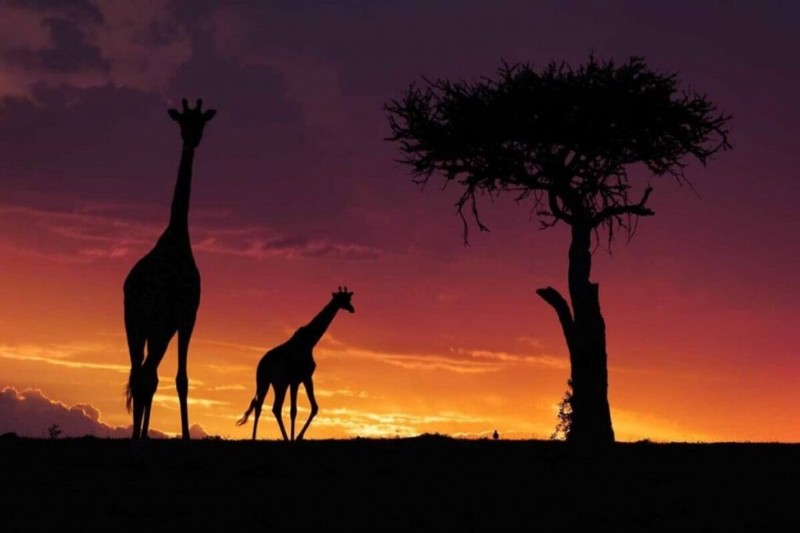
The best camera settings for wildlife photography, as you might imagine, depend on the subject you’re photographing. A fast-moving big cat, a slow-moving giraffe, a pale-coloured bird in flight against an overcast sky… these subjects will all require different tweaks to your camera. In a genre of photography where moments are fleeting and subjects are unpredictable, setting up your camera correctly for wildlife is crucial for capturing that perfect shot.
Whether you are a novice picking up your camera for the first time or an experienced photographer looking to fine-tune your skills, this guide aims to offer you invaluable insights. As you read on, you’ll discover that the best camera settings for wildlife photography can be quite nuanced, depending on a variety of factors. These range from the type of animal you’re photographing, the lighting conditions of your environment, to the specific artistic vision you aim to express.
Despite this complexity, don’t worry! We’ve prepared a range of ballpark camera settings combinations designed to serve as jumping-off points for capturing different types of shots. From soaring birds to lumbering elephants, we’ve got you covered on how to set your camera to capture the grandeur and intricacy of the natural world.
- Check out our guide to the best lenses for wildlife photography
 Photographed using the Panasonic Lumix G9
Example wildlife photography settings for different types of shots
Best camera settings for birds in flight
Shutter Speed: 1/2000s or faster
Aperture: f/5.6–f/8
ISO: 400–800
Focus Mode: Continuous autofocus (AF-C)
Suggested Focal Length: 300–600mm
Best camera settings for mammals in motion
Shutter Speed: 1/1000s–1/2000s
Aperture: f/4–f/8
ISO: 200–400
Focus Mode: Continuous autofocus (AF-C)
Suggested Focal Length: 200–400mm
Best camera settings for static animals (e.g., perched birds, resting animals)
Shutter Speed: 1/500s
Aperture: f/5.6–f/11
ISO: 100–200
Focus Mode: Single-point autofocus (AF-S)
Suggested Focal Length: 100–300mm
Best camera settings for animals in low light
Shutter Speed: 1/250s–1/500s
Aperture: f/2.8–f/4
ISO: 800–3200
Focus Mode: Continuous autofocus (AF-C)
Suggested Focal Length: 70–200mm
- Check out our guide to the best cameras for wildlife photography

What settings should I use for wildlife photography?
The settings you should use for wildlife photography will depend on various factors like subject matter, lighting conditions and your creative intent. However, a good starting point might include a fast shutter speed (at least 1/1000sec for moving subjects), a versatile aperture (around f/5.6 to f/8) and an ISO setting that balances between image quality and exposure (ISO 400 is often a safe bet). The focus mode will also vary; you could use single-point autofocus for stationary subjects and continuous autofocus for subjects in motion.
What is the best aperture for wildlife photography?
The best aperture for wildlife photography largely depends on your specific needs. However, a good range to consider is between f/4 and f/11. Lower aperture values (like f/2.8 or f/4) can be used in low light conditions or when you want to isolate your subject with a blurry background. Higher aperture values (such as f/8 or f/11) work well for capturing intricate details and are useful when shooting animals that are further away.
How can I make my wildlife pictures sharp?
Ensuring sharp wildlife pictures involves a combination of factors:
- Use a fast shutter speed to freeze motion.
- Utilize a tripod or monopod to reduce camera shake.
- Use the right focus mode for your subject (single-point for stationary, continuous for moving).
- Maintain a lower ISO to reduce noise, if lighting conditions permit.
- Use lenses with image stabilization features for additional support.

Do wildlife photographers use manual mode?
While some wildlife photographers prefer the control offered by manual mode, it’s not a requirement for capturing stunning images. Many professionals use Aperture Priority (Av/A) or Shutter Priority (Tv/S) modes to let the camera automatically adjust certain settings while they focus on the composition and subject. That said, manual mode offers the greatest degree of control and is often used by those who have a very specific vision for their shots.
What is the best focal length for wildlife photography?
The best focal length for wildlife photography will depend on the distance between you and your subject. For animals that are far away or small in size, a longer telephoto lens (300mm, 400mm or even 600mm) is generally recommended. For animals that are closer or larger, a more standard focal length (like 70–200mm) might suffice. Zoom lenses can offer added flexibility, allowing you to adapt quickly to changing situations.
Remember, even the ‘best’ wildlife photography settings are just guidelines, not hard rules. Feel free to experiment with your camera settings to find what works best for you and your unique wildlife photography challenges.