
We may earn revenue from the products available on this page and participate in affiliate programs. Learn more ›
The Sony FE PZ 16‑35mm f/4 G is a full‑frame wide‑angle zoom designed for Sony’s A7‑series E‑mount cameras. Sony labels it a G lens—just below the premium G‑Master tier—yet it delivers the resolution and image‑quality that high‑end still photographers expect, while also offering a suite of video‑centric features.
After several weeks of on‑location shooting, the lens proved to be a solid hybrid choice. Its silent, power‑zoom system, responsive autofocus, and consistently sharp images make it ideal for both photo and video, especially for users who want a high‑performance lens without a premium price tag.
Size & Weight
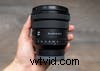
Weighing only 12.5 oz, the 16‑35mm f/4 G is remarkably lightweight for a wide‑angle zoom. Paired with a full‑frame body such as the Sony A7 III, the entire kit stays around 2.2 lbs—roughly the weight of a mid‑range DSLR body alone. The compact dimensions of 3.17 × 3.5 in allow the lens to fit comfortably into smaller camera bags, making it a natural choice for travel or long shooting days.
Build & Ergonomics
The lens is built to withstand the elements: dust‑ and moisture‑resistant construction, a fluorine‑coated front element that resists fingerprints and water spots, and an internal zoom mechanism that keeps the barrel from extending during focal‑length changes. This internal design is particularly beneficial for gimbal‑mounted video, eliminating the need to rebalance when shifting focal lengths.
Three functional rings—focus, zoom, and aperture—are located on the body, each offering smooth rotation. The aperture ring clicks at one‑third‑stop intervals but can be muted for a continuous feel, which is ideal for video work. An Iris Lock allows the aperture to be secured, preventing accidental manual adjustments. Additional controls include a variable‑speed zoom lever, a focus‑mode switch for quick manual/auto transitions, and a customizable focus‑hold button.
While the focus and zoom rings have no hard stops, the rear LCD displays the current focal length, and the infinity position is clearly marked. Some users may prefer a visible scale on the lens itself, but the on‑screen indicator mitigates this issue.
Image Quality

The optical design comprises 13 elements in 12 groups, including a Super‑ED element, two advanced aspherical elements, and an additional ED element to control distortion and chromatic aberration. In practice, the lens produces virtually no chromatic aberration even in high‑contrast scenes, and the wide‑angle barrel distortion is manageable in post‑processing. Vignetting is present across the zoom range but is mild and can be corrected with standard software.
Sharpness is consistent throughout the zoom range. When compared side‑by‑side with Sony’s 12‑24mm f/2.8 GM, the 16‑35mm f/4 G delivers comparable detail at a fraction of the cost—just under $2,000 for the GM versus roughly $1,000 for the PZ version.
The lens’s circular aperture produces smooth, pleasing bokeh, and the short minimum focus distances of 11 in (16 mm) and 9.5 in (35 mm) allow for attractive depth‑of‑field control in close‑up shots.
Focusing Performance

Power zoom and focus are driven by four XD linear motors for zoom and two XD motors for focus—six motors in total—ensuring fast, precise, and virtually silent operation. Sony’s focus‑breathing‑free design keeps the field of view stable during focus changes, a critical feature for video. Autofocus is typically instantaneous; even when a search is required, the motor noise is imperceptible, eliminating the need for audio post‑processing.
Competitive Landscape
Within the same focal‑length range, the Sony 16‑35mm f/2.8 GM offers higher optical performance but is priced $1,000 higher and lacks the power‑zoom capability of the PZ model. The older Sony Vario‑Tessar T* 16‑35mm f/4 ZA OSS, released in 2014, provides three stops of optical stabilization—absent in the new G model—but its optical performance lags behind newer Sony lenses, and its larger size and weight are drawbacks for mobile shooters.
Third‑party options such as the Sigma 14‑24mm f/2.8 DG DN Art and the Tamron 17‑28mm f/2.8 Di III RXD offer comparable or better wide‑angle performance at similar price points, yet they lack the power‑zoom feature and many of the video‑centric controls present in the Sony 16‑35mm f/4 G.
Who Should Buy?
The Sony FE PZ 16‑35mm f/4 G is a versatile choice for:
- Hybrid shooters who require a reliable wide‑angle zoom for both stills and video without a hefty investment.
- Travel creatives who value portability—its 12.5 oz weight keeps gear lightweight and balance-friendly.
- Vloggers and content creators who appreciate the silent, focus‑breathing‑free performance and easy‑to‑use controls for on‑the‑go shooting.
- Landscape and group‑photo enthusiasts who benefit from the 16‑35mm range and the lens’s smooth bokeh.
Overall, the Sony FE PZ 16‑35mm f/4 G offers a compelling blend of image quality, video features, and portability, making it an excellent investment for anyone looking to elevate both their photography and videography.