
Solar filters help protect both you and your camera from the intense effect of the sun’s light, and you’ll need to invest in one if you plan on photographing the sun. Most solar filters cost upwards of $100, so thrifty photographers have been building their own DIY solar filters instead of purchasing one for years.
Today, we’ll teach you how to make a solar filter for a camera, so you can begin capturing beautiful images of the sun without having to spend $100 or more for a quality DIY solar filter.
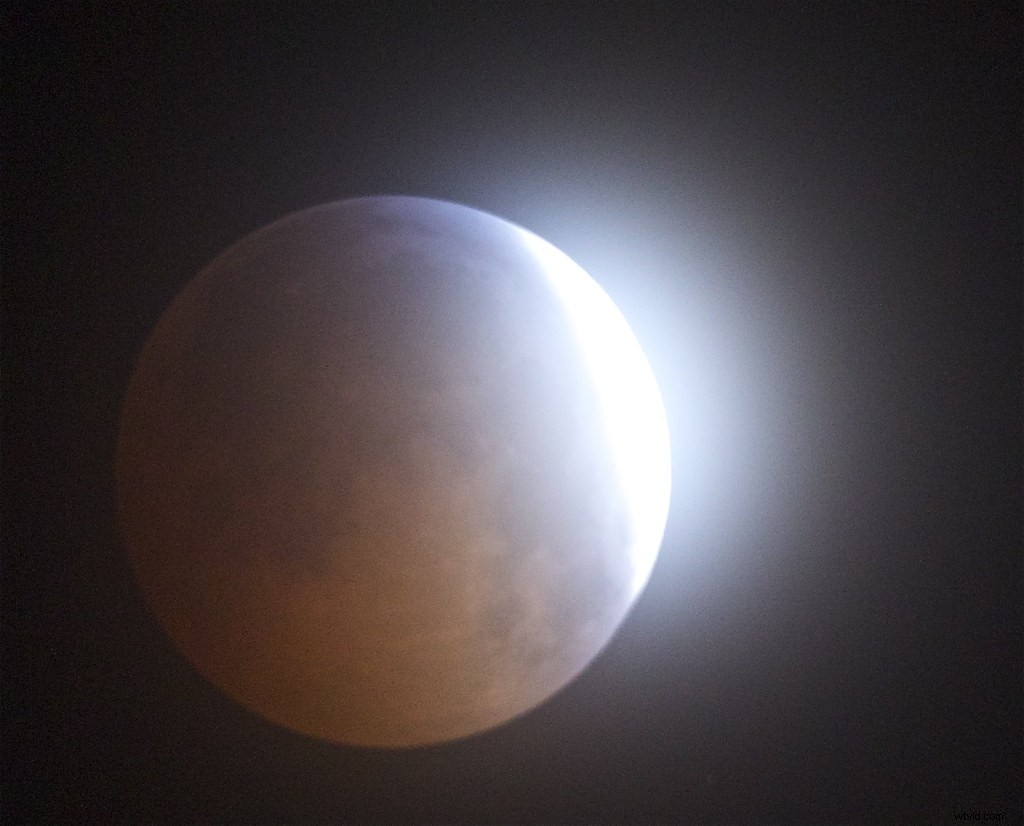
“eclipse flare decemeber 21 2010” by davedehetre is licensed under CC BY 2.0
What You’ll Need
Many of the supplies you’ll need to build your solar filter are things you probably already have around the house, especially if you have young children. The one item you probably won’t have at your disposal is the Baader solar film, which is available from most optics stores and online retailers.
To make a solar filter for your camera, you’ll need the following supplies:
- 1 sheet of Baader AstroSolar Safety Film 5.0
- 2 pieces of heavy white cardstock, bristol board, or cardboard
- Scissors
- Mechanical compass
- Pencil
- Double-sided tape
- Craft glue (Elmer’s or similar)
- A few tissues
Step 1: Create Your Circles
Using the compass and pencil, trace out two circles on your paper that are roughly 4” larger than your camera’s aperture.
Inside of those two circles, create another ring that’s the same size as your camera’s aperture. If your camera has a dew shield that isn’t removable, your inner circle should be the same diameter as the dew shield instead of the camera aperture. Cut out the circles.
Check the circles against your camera. The inner-circle should match up with your camera’s aperture or dew shield, and the outer ring should hang over the sides of the camera.
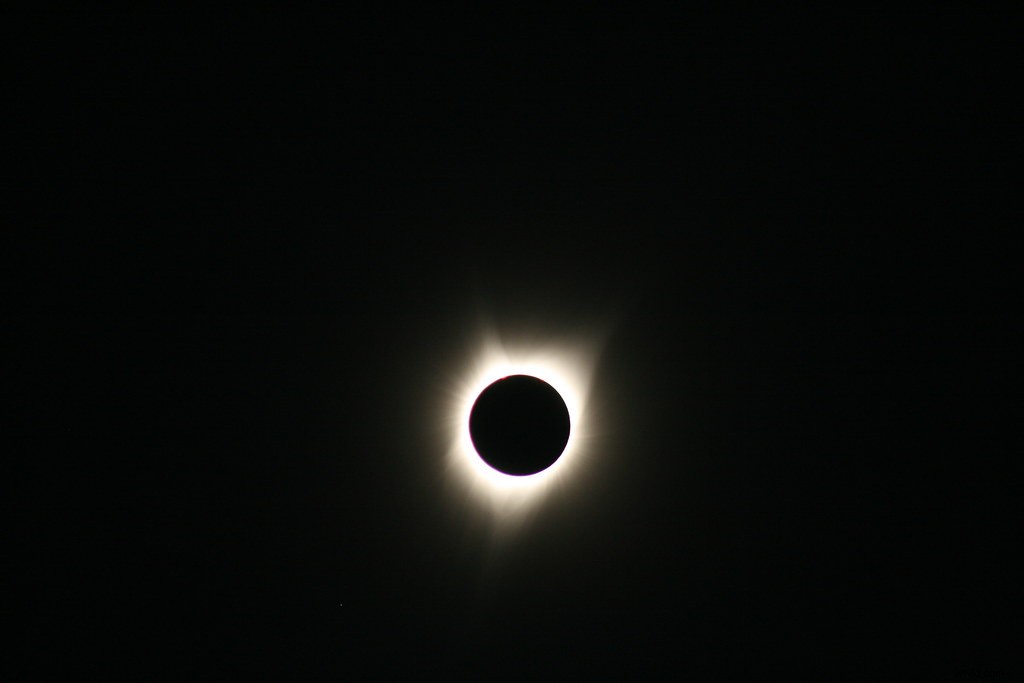
“Eclipse seen from Perrydale, Oregon” by born1945 is licensed under CC BY 2.0
Step 2: Apply Tape to the Circles
Cover one side of each circle completely with the double-sided tape. It’s easiest to lay out the tape in overlapping strips, then use scissors or a razor blade to cut away all of the excess tape.
Step 3: Preparing the Filter
Take a tissue and lay it out flat on the table. Tape each corner of the tissue to the table to ensure that it’s lying completely flat against the table without wrinkles. The tissue will help protect the solar safety film as you work.
Step 4: Prepare the Solar Film
Cut out a square piece of solar film that’s slightly larger than the outer circle you cut out in step one. Don’t remove any of the protective coverings from the film at this point.
Step 5: Prepare to Mount Solar Film
Place the square of solar film onto the piece of tissue you have taped to the table. Lightly tape the corners of the solar film so that it lays perfectly flat against the tissue. Next, remove the protective coating from the solar film. Do so very gently, as any damage to the solar film will compromise its optical quality.

“Young Photographer” by nhoffmann75 is licensed under CC BY 2.0
Step 6: Attach the First Cardboard Ring
Take one of your cardboard rings with the sticky side facing down and hold it about an inch above the solar film. The idea is that you want the ring to make complete contact with the film at the same time. Once the circle is positioned correctly, drop the circle onto the solar film, and apply light pressure to ensure that it’s adhering correctly.
Step 7: Attach the Second Cardboard Ring
Repeat the process from step 6, being careful not to place any stress onto the solar film. Remove the protective film from the top side of the film, and attach the cardboard ring.
At this point, you should have a pristine piece of solar film sandwiched between the two cardboard rings.
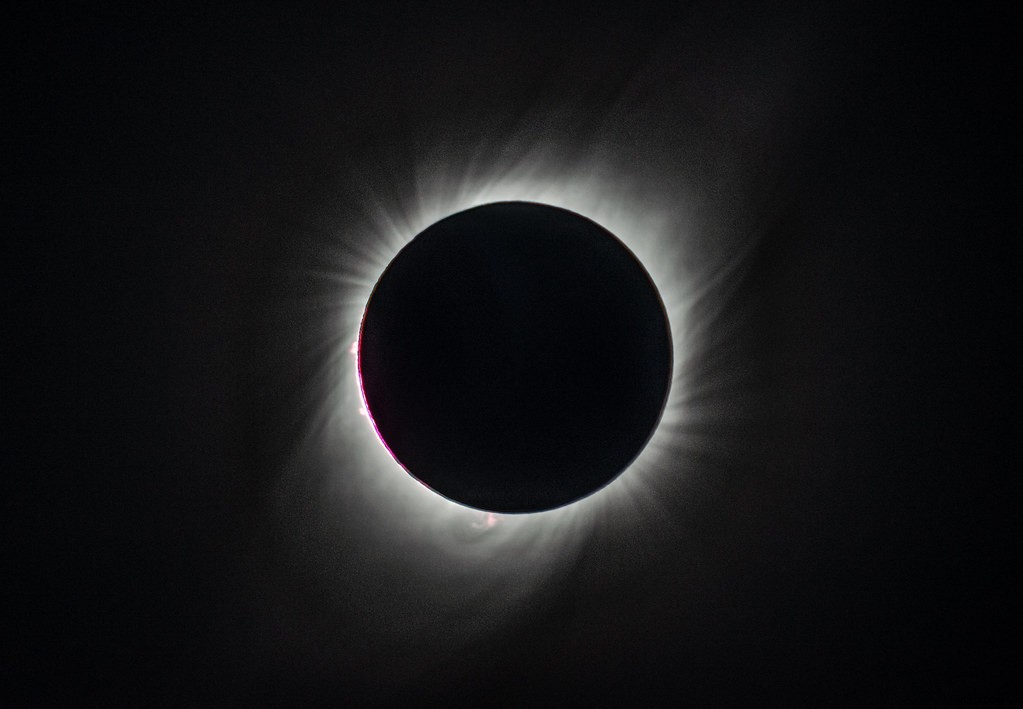
“Total Solar Eclipse – July 2, 2019” by NASA Goddard Photo and Video is licensed under CC BY 2.0
Step 8: Create the Base
Cut three strips about 2” wide from the same cardboard or cardstock you used to cut your circles. Wrap the first strip around the dew cap or objective lens on your telescope and secure it with double-stick tape. Repeat this process two more times, so you have a triple-thick ring of cardboard that’s easy to attach to the dew shield or lens on your camera.
Step 9: Glue the Base to the Filter
Finally, remove the cardboard strips from the telescope. Apply a thin layer of glue to the bottom side of the cardboard strip assembly, and attach it to the solar ring you’ve created. Once the glue dries, your new solar filter will be ready to use!
Be sure to exercise care when storing your new solar filter. If the solar film becomes scratched, bent, or otherwise compromised, your new filter will be ruined. Store your solar filter carefully away from anything that may damage it.