
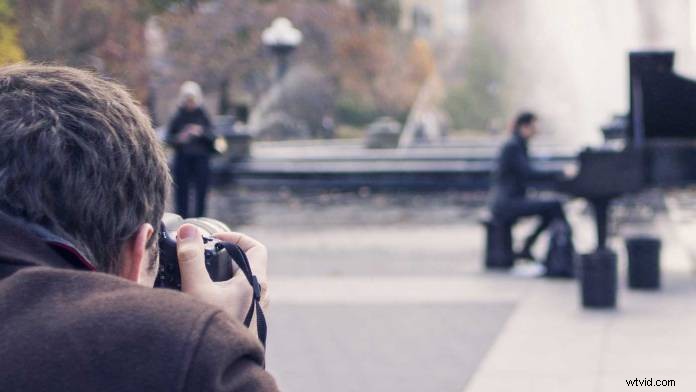
Sometimes the best way to advance a skill rapidly and with the greatest degree of precision is to be still. The idea seems counterproductive at first, but after consideration, the notion holds water. Top athletes work out the components of their mechanics slowly and methodically. They often use slow-motion video or frame-by-frame analysis to correct minute movements. In this case,
Despite this, I believe that the zen of stillness is something that can benefit every aspiring cinematographer. While motion is an essential part of
Famed director Stanley Kubrick is one such example. Before garnering fame as the director of such renowned films as “2001: A Space Odyssey,” “A Clockwork Orange,” and “Eyes Wide Shut,” Kubrick was a photographer. An April 2018 article by the NY Times tells how, as a young 17-year-old living in the Bronx, Kubrick was employed as a staff photographer for Look magazine. The article features a collection of photos taken by the future cinematic icon.
The NY Times article quotes Kubrick as crediting his time as a working photographer as an important part of his journey to motion pictures. Kubrick explains, “I think if I had gone to college I would never have been a director.” The black and white photos show that, even as a young man, Kubrick had a masterful eye for composition, camera position, lighting
This familiarity with still photography no doubt influenced the cinematic work that Kubrick would later produce. Perhaps spending time mastering the disciplines of still photography could have a similar impact on your work.
Removing the motion from your media and working with still images allows you to slow down to concentrate on designing your shots with a greater sense of awareness and attention to detail. With photography, you can focus the full weight of your creativity on capturing a single moment in time. The practice will permit you to belabor — in the only most positive way — your camera settings, to explore the nuances of exposure, and to focus on the depth and intentionality of your lens choice. It offers you the opportunity to carefully craft the angle, intensity
Sometimes, in order to get things moving, we need to be still.