
Leading lines direct the viewer’s attention to particular parts of an image. They are one of the most effective and under-utilised compositional tools in photography.
By determining the point of interest, leading lines create dynamic compositions. In using such compositional techniques, your pictures will be more interesting. This is why it is helpful to learn how leading lines work.
In this article, we present the information you need to use leading lines for better images.
What Are Leading Lines?
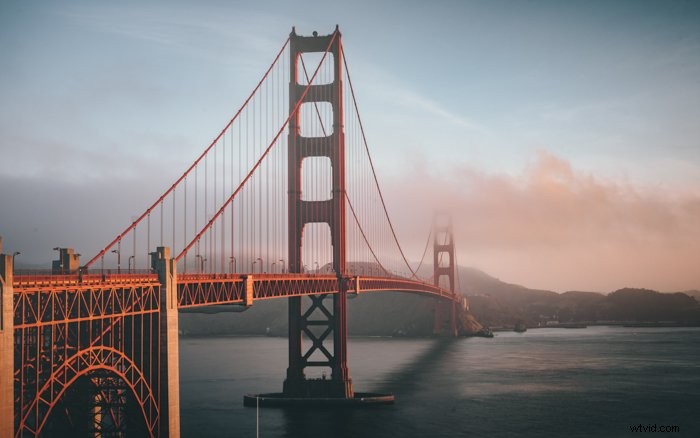
Leading lines create a path to show a way for the eyes to explore the essential elements of your image. You can have actual lines or a succession of individual components. Together they make up an imaginary line.
Leading lines can have different effects on the image. Utilising them is a great way to draw attention to your subject by using the surrounding scene. Leading lines guide the viewer’s eyes through the image. This movement adds a dynamic feeling to the photo.
Why Are Leading Lines Important?
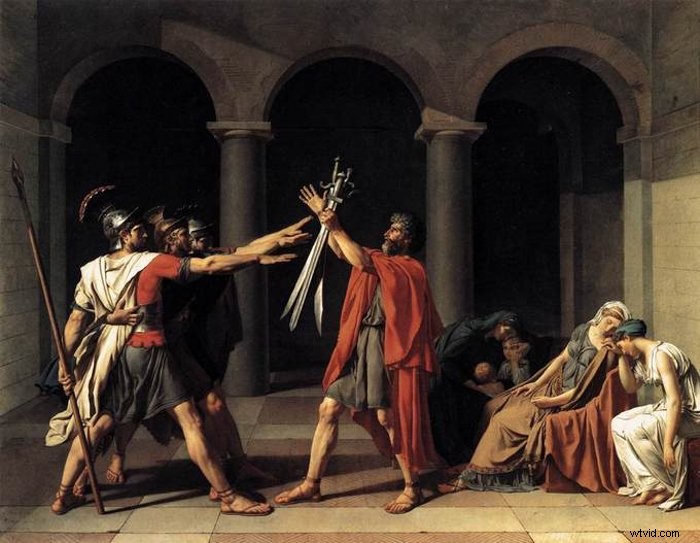
Leading lines have been in use for centuries to create visual flow. They have appeared in paintings such as the Oath of the Horatii by Jacques-Louis David in 1784. You can see that the soldier’s arms and background columns guide attention to the middle. This was the painter’s goal as this is where the main subject stands.
This resulted in photographers applying this technique as well. If you have a crowded photograph, a leading line takes the viewer’s eye to the photo’s focal point. These lines also create depth, which helps separate the foreground from the background.
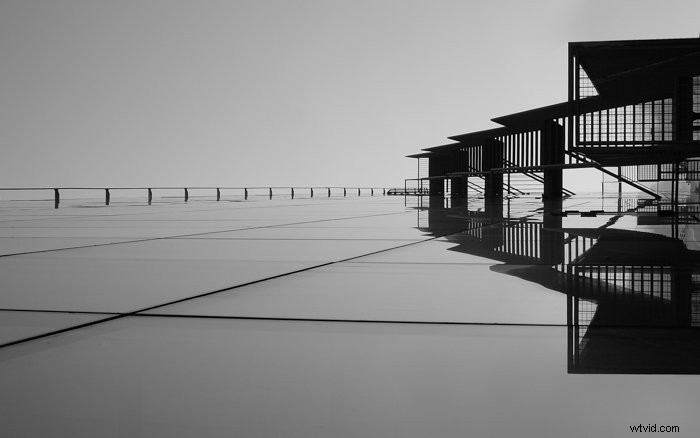
Symmetrical lines result in a balanced composition, making the photo more pleasing.
Mindful composition is the key to getting these effects. Whether leading lines have the desired results depends on your ability to compose a shot. It would be best if you aimed to utilise the lines appearing in the scene.
Types of Leading Lines
Leading lines come in many forms. Types of leading lines can be vertical, parallel, curved, diagonal, and even strong horizontal lines. They tend to come in handy in landscape and architecture photography. But, you can also use them in portraiture, especially in the case of urban portraits.
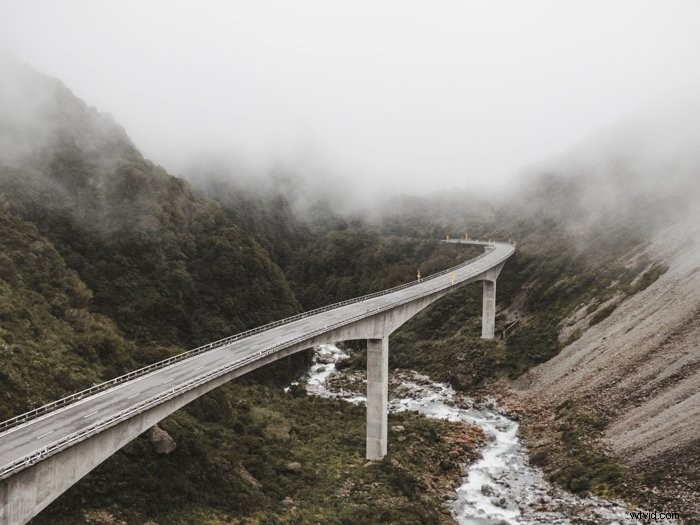
You can create leading lines by using paths, rails, buildings, bridges, or streets. Even rows of trees or lampposts appear as lines.
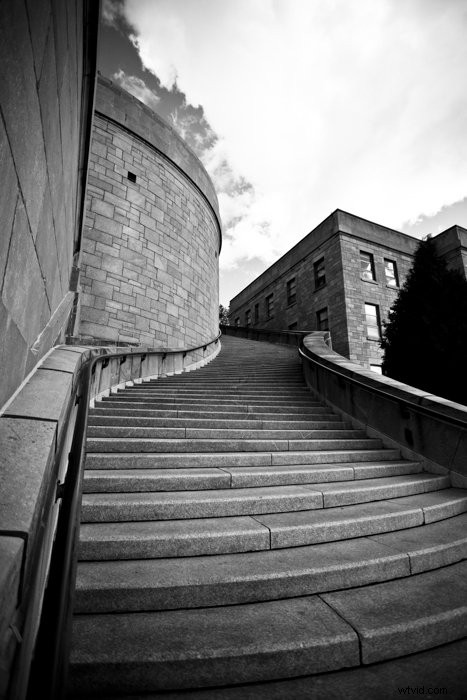


Leading Lines vs Paths
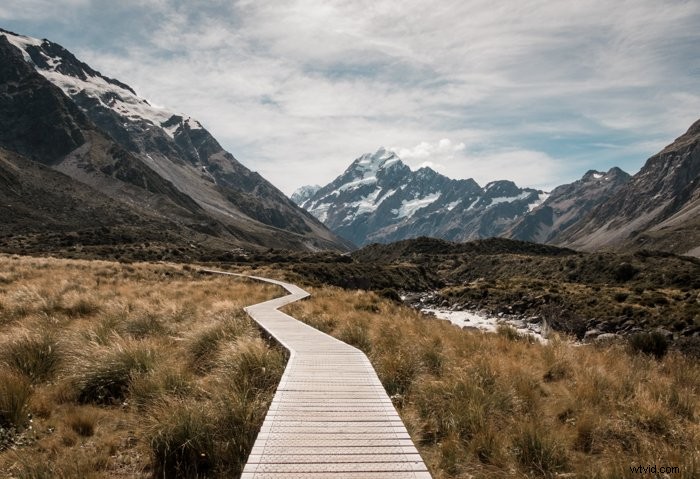
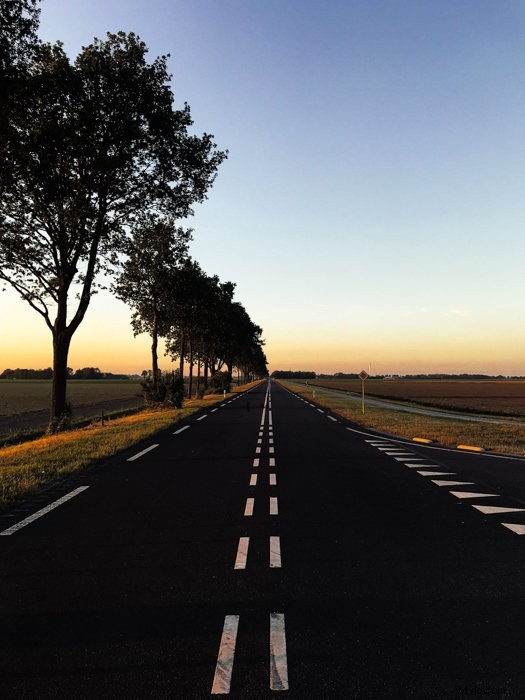
The difference between a leading line and a path is simple. Both techniques use lines to guide your attention, but they serve a different purpose. A leading line takes you to the point of interest in the frame. A path tends to lead you to a vanishing point.
For example, this image contains a leading line as it draws your attention to the snowy mountains.
In contrast, the road here serves as a path, as it winds through the image, creating a vanishing point on the horizon.
How To Use Leading Lines
Leading lines are the most useful in landscape and architecture photography. This is because lines appear in many forms around us, both in nature and in infrastructure. It would help if you walked with open eyes, paying attention to the scene, to notice leading lines.
After finding leading lines, it is important to use them in a way that makes a more coherent composition. Being mindful when composing the image is the key. Misused lines can cause confusion as much as they can help a composition.
First, determine your focal point. Focal points are the essential parts of the image, where the viewer’s attention should go. You should ask: where are your lines leading the viewer’s eye?
This is where the lines should guide your eyes. They should not lead out of the frame because that would misguide the viewer. It is also wrong if the lines do not lead anywhere particular. In this case, they only confuse the viewer and drag attention away from your focal point.
Whether you’re a landscape or architecture photographer, position and perspective are everything.

The other week I was out taking photos of a local viaduct. I was walking around the adjacent field, trying to find the best angle.
As I made my way around the field, I noticed there were many leading lines. I could use these to direct my viewer’s attention to my main subject – the viaduct.
I first passed many lines that would have only served to confuse a viewer. This is visible in the first image. If you follow the lines through the frame, your eyes move out of the frame towards the left.
Now, look at the second picture. I found some lines which bring your eyes up towards the bridge and down that path. It makes you feel as if you are standing in the frame and looking at the path you have to follow to get to your destination. That destination is the bridge in the distance.
Do you see how much more powerful correct leading lines make the same image?


Before taking the image, walk around and experiment with different points of view. A tiny change in perspective can have an enormous effect when it comes to leading lines.
Conclusion
Leading lines are powerful compositional tools that can add movement to your images. After finding such lines, it is important to pay attention to how you use them. They should guide the viewer’s attention to the focal point of the image.
Always ask yourself, ‘where is my attention directed?’. Look for these lines around you and use them to your advantage.
We hope that this article has helped you to understand and use leading lines in photography.