
Reading Time: 12 minutes
Published: July 17, 2024 | Last Updated: July 2, 2026

Overview
Definition: Narrator types are the primary ways a film controls who delivers information, how close we get to a character’s mind, and how much we can trust what we’re told.
What you’ve seen before: Think of a film’s voice‑over, a diary entry, a documentary‑style narrator, or a “story‑teller” frame that reshapes your perception.
 In Fight Club (1999), the narrator’s voice‑over co‑exists with Tyler Durden, keeping the story locked to the narrator’s limited point of view. The film’s revelations are only fully understood on a rewatch, when the “guide” is seen to have blind spots.
Example: In Fight Club (1999, 20th Century Fox), the narrator’s voice‑over leads us through his thoughts as events unfold. Later revelations force us to re‑interpret earlier scenes because the narrator’s perspective was incomplete.
Why it matters: The narrator type dictates what information is available and when, shaping suspense, surprise, and exposition. A limited narrator can delay key facts, while an omniscient one can confirm them early. Inconsistent access rules can make reveals feel arbitrary and erode trust in the narrative flow.
- Key takeaway 1: Pick a narrator type that aligns with the story’s secrets, delays, and confirmations.
- Key takeaway 2: Match the narrator’s knowledge to the scene’s goal for fair and satisfying reveals.
- Key takeaway 3: Treat voice‑over as a viewpoint tool—it shapes belief, not just information.
Before listing the main narrator types, we need clear labels. Film narration is more than “who speaks”; it’s how the film orchestrates what we know and when.
What Is a Narrator Type in Film? Definition & Meaning
In film, a narrator type is part of the overall narration system that governs how the audience receives story information. It comprises what the film shows, hides, and the order of clues. A narrator type operates within four key dimensions: source (diegetic vs. non‑diegetic), range (restricted vs. unrestricted), depth (internal vs. external), and reliability (trustworthy vs. unreliable). Understanding these dimensions helps differentiate a narrator type from a simple POV shot or a plot list.
Why Narrator Types Matter When Writing and Analyzing
Narrator choices decide what the audience knows at each moment. They determine how long a mystery stays alive, how a reveal lands, and how closely we feel to a character’s fears or triumphs.
In a script, narrator choices influence which scenes can be included without spoiling answers too early. In analysis, they define the claims you can support, as the film may intentionally block critical information.
Narrator, Point of View, and Narration: Related but Distinct Concepts
These terms are often conflated. Clarifying them prevents misdirected fixes.
Film theorists treat narration as a system. Gérard Genette introduced focalization to track who knows and perceives (Genette, 1980). David Bordwell described film narration as patterns of cues that guide inference (Bordwell, 1985).
Narrator Is the Source Behind the Telling
Narrator is the source you feel behind the telling. It can be a character or an author‑like guide who moves freely through the story.
Test: If the film shows events no character could witness, the narrator is authorial. If the film remains tied to a single character’s knowledge, it is character‑based, even when no voice is heard.
Point of View Is a Person Label, But Film Rely on Access
Point of view in literature usually denotes first, second, or third person. In film, it is better described by the information the audience receives.
The practical question: Does the film limit you to what one character could know, or does it also provide external knowledge?
Focalization Helps Identify Who Knows and Who Sees
Focalization tracks the flow of information. Internal focalization stays within a character’s knowledge. External focalization focuses on observable behavior. Zero focalization exceeds any single character’s knowledge, creating an omniscient feel (Genette, 1980).
Bordwell’s scale—restricted vs. unrestricted—offers a practical test for narration scene by scene (Bordwell, 1985).
A Quick Narrator Chart for Any Film
This chart lets you label what the film is doing. Focus first on access, then add a “person” label if helpful.
- First‑person: A character frames the story as “I” or “we,” often via voice‑over, confession, diary, or direct address.
- Second‑person: The telling addresses “you,” used sparingly to recruit or accuse the audience.
- Third‑person limited: Information stays close to one character’s knowledge, so major facts arrive late.
- Third‑person omniscient: The film moves across characters and locations, showing what no character knows.
- Objective narration: The film stays outside minds; meaning comes from behavior and consequences.
- Stream of consciousness: Thought flow drives structure, with jumps in time and memory.
- Unreliable mode: The guidance is questionable through contradictions, gaps, or motivated lies.
Core Narrator Types with Film Examples
Most films blend narrator tools across the runtime. Labeling the dominant type in a sequence or act is often sufficient for analysis.
First‑Person Narrator in Film
A first‑person narrator tells the story from a character’s perspective, usually via voice‑over. It can also appear in confession scenes, letters, or a story told to another character.
In Goodfellas (1990, Warner Bros.), Henry Hill’s voice‑over frames values and facts alike. The voice frames what feels normal, exciting, or threatening, reshaping our reading of the same actions.
In The Shawshank Redemption (1994, Columbia Pictures), Red’s voice‑over frames the story as remembered life. The camera can still show scenes Red did not witness, but the voice guides what the film treats as important.
 In The Shawshank Redemption (1994), Morgan Freeman’s Red examines a rock hammer, a detail his voice‑over later highlights. Red’s narration frames the film as a remembered life, allowing the camera to show moments he wasn’t present for while the voice decides what matters.
Third‑Person Limited Narration in Film
Third‑person limited shows what one character learns, keeping major facts from us until the character discovers them.
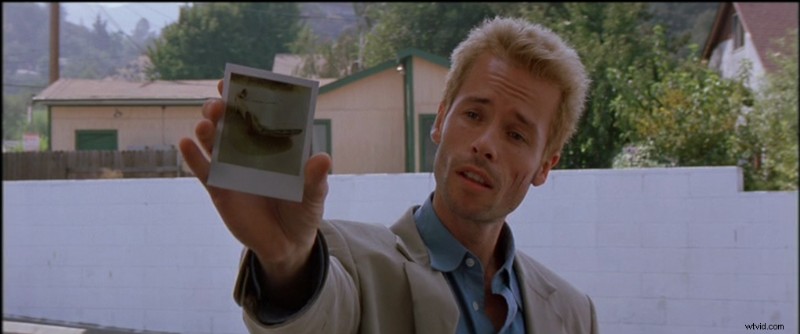 In Memento (2000, Newmarket), Leonard holds a Polaroid, trying to piece together his world. The film’s subjective POV matches his confusion and memory loss, letting us experience the world as he does, fragment by fragment.
Memento is largely restricted (third‑person limited) but often feels subjective because the structure traps the audience inside Leonard’s broken memory.
When writing third‑person limited, protect the restriction by avoiding scenes that reveal answers while the lead is absent. Excessive cut‑aways to extra context break the promise of limitation.
Third‑Person Omniscient Narration in Film
Third‑person omniscient aligns with unrestricted narration. The film can cross‑cut events, jump between locations, and reveal information characters lack.
In The Lord of the Rings: The Fellowship of the Ring (2001, New Line), the story cross‑cuts across a vast map. No single character owns the narrative; the film’s organization becomes the main guide.
This type supports epics and ensemble stories, keeping the big picture readable, though at the cost of intimate proximity to any single character.
Objective Narration and External Focalization in Film
Objective narration stays outside characters’ inner lives. Meaning comes from behavior, dialogue, and consequences, avoiding direct access to thoughts.
It can increase ambiguity and realism, as the film refrains from translating emotions into explanations.
Example: The Maltese Falcon (1941, Warner Bros.) relies on actions, withholding, and subtext. The film never gives inner thoughts, so we read motives from what people do and say.
Second‑Person Effects and Direct Address in Film
Second‑person effects address “you.” Full second‑person narration is rare, but direct address appears in scenes or brief stretches.
Direct address can recruit, accuse, or involve the audience, but consistency is key. A one‑off “you” can feel like a gimmick.
Example: Bright Lights, Big City (1988, United Artists) uses second‑person language to self‑accuse, pulling the viewer into the protagonist’s self‑blame.
Stream of Consciousness Narration
Stream of consciousness follows the flow of thought over clean chronology. In film, it manifests as associative editing, memory jumps, unstable time, and subjective sound.
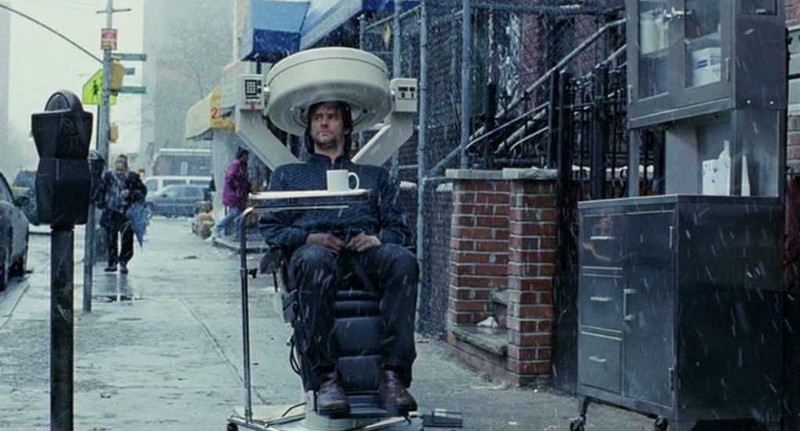 In Eternal Sunshine of the Spotless Mind (2004, Focus Features), Joel’s headgear turns an ordinary street into a memory space. Scenes jump to the most intense feelings as Joel’s relationship with Clementine disintegrates.
The film’s structure follows emotional logic, expressing the relationship’s collapse as it felt to Joel.
Diegetic vs. Non‑Diegetic Narration in Cinema
Diegetic narration exists inside the story world—characters hear or experience it. Non‑diegetic narration sits outside the world—no character hears it.
Diegetic Narration in Film
Diegetic narration occurs when a character tells a story to another, or when a recorded message plays inside a scene. Characters can react to it, creating natural gaps and stakes.
Non‑Diegetic Narration in Film
Non‑diegetic narration, like voice‑over, is heard only by the audience. It can clarify quickly but may lower tension if it repeats what the image already shows. Redundancy is a red flag.
Read more on diegetic and non‑diegetic sound in film.
Voice‑Over and Internal Monologue Are Tools, Not Automatic Answers
Voice‑over is a visible narrator tool, easy to reach for. The craft question is job‑based: what does the narration deliver that image and dialogue cannot?
How Voice‑Over Works in Film
Voice‑over can compress time, frame a moral stance, create irony, or misdirect. It offers instant intimacy, letting us hear a mind without a long setup.
Example: Sunset Boulevard (1950, Paramount) uses voice‑over to frame the story with attitude, influencing how we read scenes with judgment and information.
For a focused craft breakdown, see our guide to voice‑over, which covers common jobs and pitfalls.
Internal Monologue vs. Voice‑Over in Screenwriting
Internal monologue and voice‑over look similar on paper but feel different on screen. Voice‑over is shaped and selective; thought‑stream is raw and immediate.
Both need clarity; you cannot reread a line during a scene, so the language must land on first exposure.
Our guide to internal monologue helps you separate inner speech from other narrator tools.
Unreliable Narration in Literature and Film
Unreliable narration keeps you engaged while the guidance remains questionable. It works best when the film provides enough stability to track the story and enough mismatches to raise doubt.
Wayne C. Booth described how narrators mislead through bias, error, and manipulation (Booth, 1961).
What Makes a Narrator Unreliable
Unreliability arises from lying, self‑deception, ignorance, or distorted perception. In film, it is easiest to defend when you can point to mismatches between narration and observable facts.
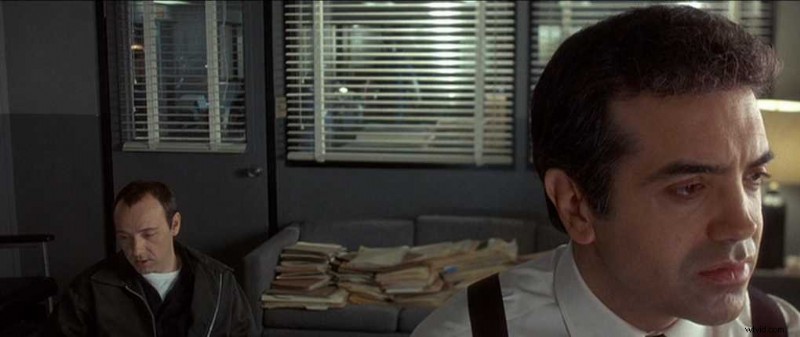 In The Usual Suspects (1995), Verbal Kint’s story is an unreliable narrator. The U.S. Customs Agent listens, and later facts expose missing pieces.
The film presents the telling as a strategy under pressure. Details feel plausible until later information reveals how the story was constructed from convenient pieces.
How Films Signal Unreliability Without Losing You
Films plant fairness signals—a small moment that does not fully align with a claim or a structure that repeats an event with changed details.
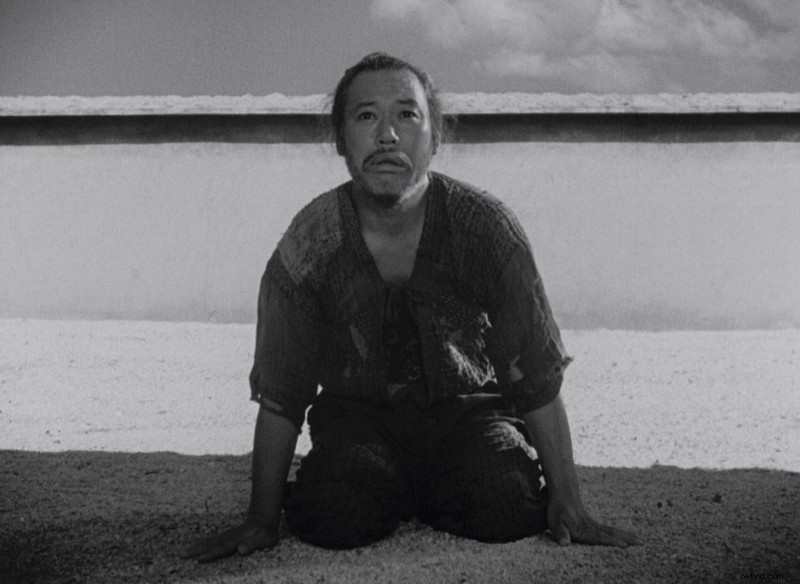 In Rashomon (1950), the film shows one version of an incident and then rewinds to reveal other testimonies. Your judgment shifts as new perspectives change what you think you know.
Rashomon is a classic model of conflicting accounts, exposing motive and self‑protection.
For a deeper reliability guide, see our article on the unreliable narrator.
Writing Narrator Types in a Screenplay: A Practical Workflow
Most screenplays use third‑person description plus dialogue. Your narrator choice still appears through scene selection, information control, and narrator tools like voice‑over or a frame setup.
- Name the access rule. Decide if the film stays restricted to one character’s knowledge or moves freely. Write a one‑sentence rule you can test on any scene.
- Choose the narrator source. Decide if narration is tied to a character, a frame, or implied through structure without a speaking voice.
- Choose the depth. Decide how often you go inside a mind versus staying on behavior and consequences.
- Write a stress‑test scene. Draft one scene where your rule creates a hard limit. A limited narrator cannot reveal the truth early. An omniscient setup can show danger that a character cannot see.
- If you use voice‑over, give it a job. Name what it does. Common jobs include time compression, value framing, irony, and controlled misdirection.
- Check consistency in the outline. Look for scenes that break your access rule for convenience. If you break the rule, decide what you gain and what you lose.
How to Analyze Narrator Types in a Finished Film
Strong analysis treats narration as trackable choices. Focus on what the film gives you, when it gives it, and what it asks you to infer.
- Separate narrator from camera tricks. A POV shot creates closeness, but it doesn’t automatically create a first‑person narrator.
- Track knowledge gaps. Write what you know at the end of each major sequence. Then ask who could know that information inside the story world.
- Label restricted vs. unrestricted. If the film shows events no main character can witness, narration is more unrestricted, even with subjective scenes.
- Track value framing. Note what the film treats as normal, exciting, shameful, or funny. Voice‑over, music, and editing can all do this.
- Test unreliability with contradictions. Defend the claim with mismatches between narration and observable facts.
- Watch for convenience breaks. If the film breaks its access rule to deliver a clue, note how it changes suspense and trust.
Frequently Asked Questions
What are the main types of narrator?
The main types are first‑person, second‑person, third‑person limited, third‑person omniscient, and the unreliable narrator.
What is a first‑person narrator?
A narrator who tells the story from their own perspective using “I,” giving direct access to one character’s thoughts and feelings.
What is an omniscient narrator?
An all‑knowing third‑person narrator who can access the thoughts, feelings, and knowledge of every character.
What is an unreliable narrator?
A narrator whose account cannot be fully trusted, due to bias, deception, or limited understanding.
What is the difference between a narrator and point of view?
The narrator is who tells the story; point of view is the perspective from which it is told.
Summing Up
Narrator types describe how a film guides your knowledge, your closeness to characters, and your trust in what you’re told. In film, narration is a system of cues, even when no one speaks as a narrator.
Point of view labels can help, but focalization and restricted vs. unrestricted narration often describe film more cleanly. Diegetic and non‑diegetic labels place narration inside or outside the story world.
Voice‑over works best when it has a clear job—time compression, value framing, or irony. Unreliable narration works best when the film gives fairness signals and trackable contradictions. When you write, an access rule plus a stress‑test scene helps keep narrator choices consistent throughout the draft.
Selected Suggested Reading
- Genette, G. (1980). Narrative Discourse: An Essay in Method. (J. E. Lewin, Trans.). Cornell University Press. (Original work published 1972)
- Bordwell, D. (1985). Narration in the Fiction Film. University of Wisconsin Press.
- Booth, W. C. (1961). The Rhetoric of Fiction. University of Chicago Press.
- Chatman, S. (1978). Story and Discourse: Narrative Structure in Fiction and Film. Cornell University Press.