
In a nutshell
- Grips are the unsung artisans of the film set, expertly controlling camera motion and sculpting light to craft immersive cinematic moments.
- Today’s grip department includes specialized roles such as key grip, best boy, dolly grip, and the handy “hammers” who secure rigging on set.
- Becoming a grip blends hands‑on experience, formal training from film schools or unions, and continual learning through industry literature and mentorship.
What exactly does the term “grip” mean in filmmaking? It denotes a collective of skilled technicians whose duties range from camera support to light manipulation. Their contribution is vital to the smooth operation of any production.
This article explores the history, responsibilities, and career path of grips, illuminating their indispensable role on set.
Grip defined
The word “grip” originates from the early “handbag” of film helpers—a kit of clamps, tools, and gadgets that secured cameras to railings, car fenders, and other structures. Over time, the term evolved to describe the people who used those tools.
Grips are often described as “jacks of all trades.” They may hold a camera for a fatigued operator, engineer complex rigs, or fabricate custom supports. An experienced grip is a precious asset to any production.
The Oxford Dictionary offers these definitions that echo a grip’s role on set:
Verb
1. To take and keep a firm hold of; to grasp tightly.
2. To be “gripped” with excitement.
Noun
1. A firm hold; a tight grasp or clasp.
2. An effective form of control over something.
These meanings translate to the grip’s work: securing cameras, controlling light, and shaping the visual language of a film.
In the beginning
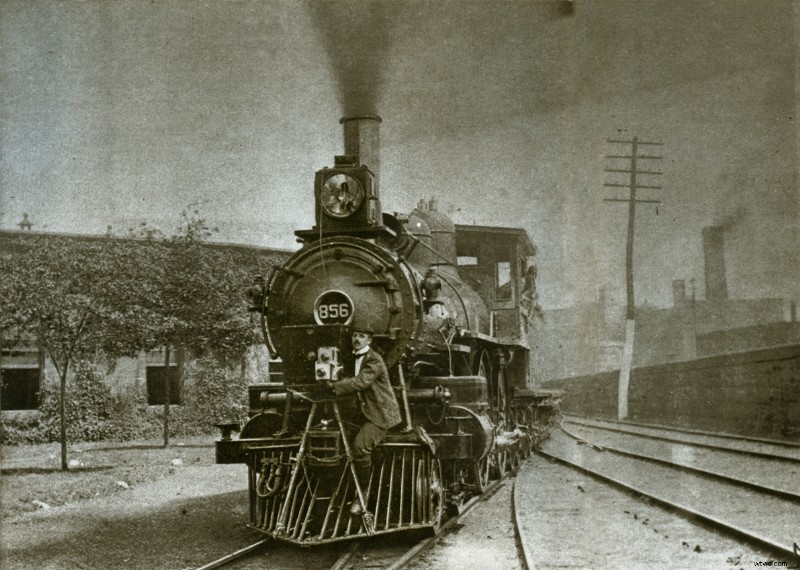
Early cinema dazzled audiences with “phantom rides,” short films that captured the world from a moving train’s perspective. The camera was mounted to the front of the engine, a feat accomplished by a grip who clamped it to a rail or door frame, providing a firm hold amid a precarious environment.
As storytelling demands grew, so did the need for creative camera placement. Grips adapted, inventing new rigging solutions that allowed cinematographers to capture ever‑more dynamic angles.
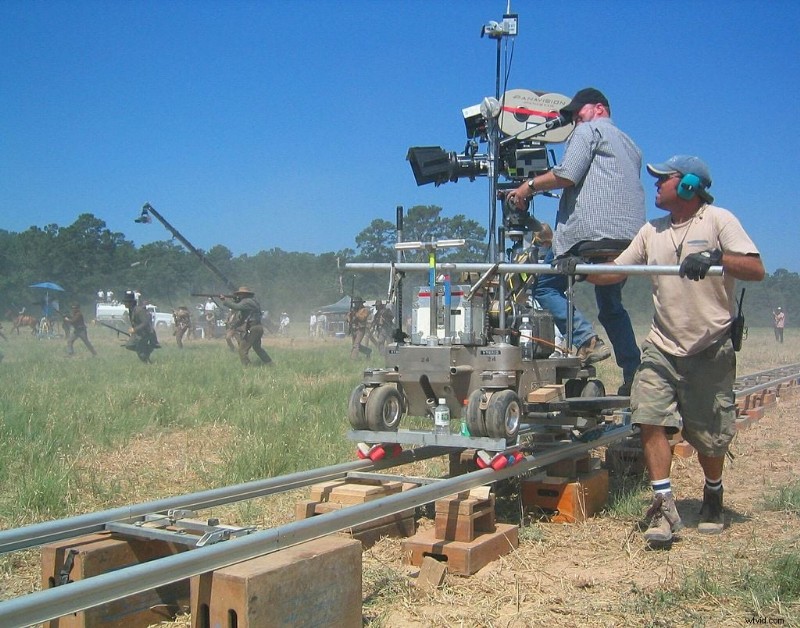
A dolly grip operating a Chapman Hybrid dolly demonstrates how grips maintain smooth camera movement on a leveled track. Image courtesy: Film Connection
The grip department expanded, adding roles like key grip—who directs the team and collaborates closely with the gaffer and director—best boy—who manages manpower and equipment procurement—dolly grip—who oversees all camera support, and the classic “hammer” grips, so named for the hammers they carry to secure hardware on set.
All in a day’s work
Grips collaborate with the cinematographer to execute precise camera movements, ensuring shots reveal narrative beats at the right moments and immerse the audience.
Camera dollies, supplied by manufacturers such as Chapman, Suter, and Klockner, are central tools. The dolly grip operates these under the cinematographer’s guidance, often building custom tracks to guarantee stability during tracking shots.
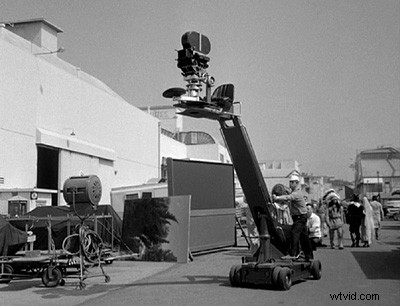
A vintage Chapman crane used on the Columbia Pictures backlot illustrates how grips harness cranes and jibs to elevate camera angles, adding dramatic breadth to scenes.
Consider the opening of “High Noon” (1952), where the camera pulls back from Marshal Will Kane to reveal a dusty town. The sweeping motion, achieved by a crane rig, sets the tone for the film’s tension.
Cutting and shaping light
Early filmmaking relied heavily on natural light, demanding grips to transport and set up heavy equipment on remote locations. With the advent of studio lighting, grips shifted focus to support the gaffer in crafting expressive, three‑dimensional images.
Today, grips manage an array of lighting control tools—including flags, nets, diffusion gels, and reflectors—to shape light and create mood. They collaborate with gaffers to transform flat illumination into stylized, narrative‑driven lighting.
Flags and Nets
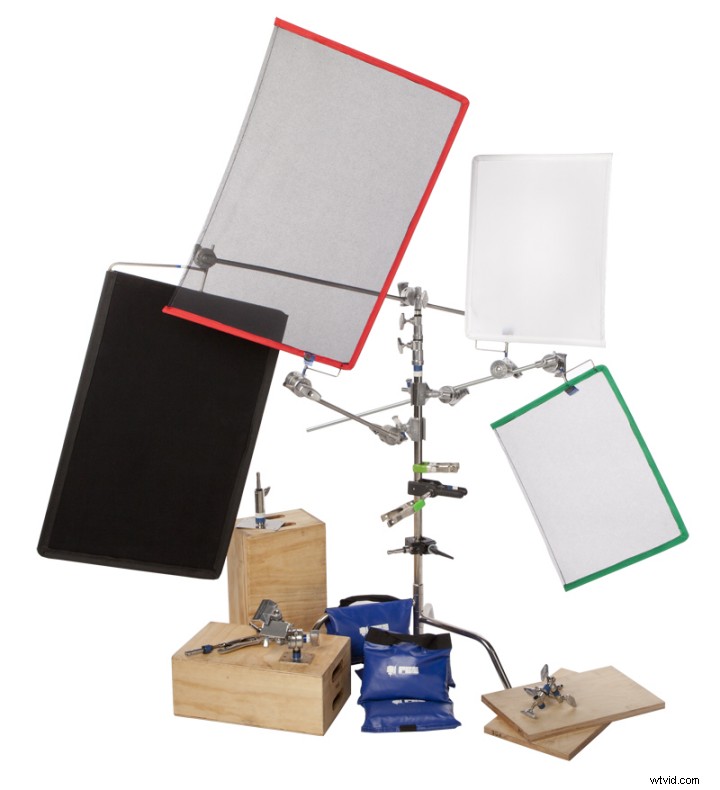
Flags cut portions of a light beam that would otherwise wash out the desired shadows. Nets modulate intensity without fully blocking the source, allowing subtle control over exposure. C‑stands secure these tools, enabling precise adjustments.
Diffusion
Diffusion softens or reduces the contrast of a light source. Grips apply gels to lights using C‑47 clothespins or attach open‑frame diffusion panels on C‑stands, creating a gentler light quality. On location, large overhead diffusion—known as “butterflies”—smooths harsh direct sunlight.
Reflectors
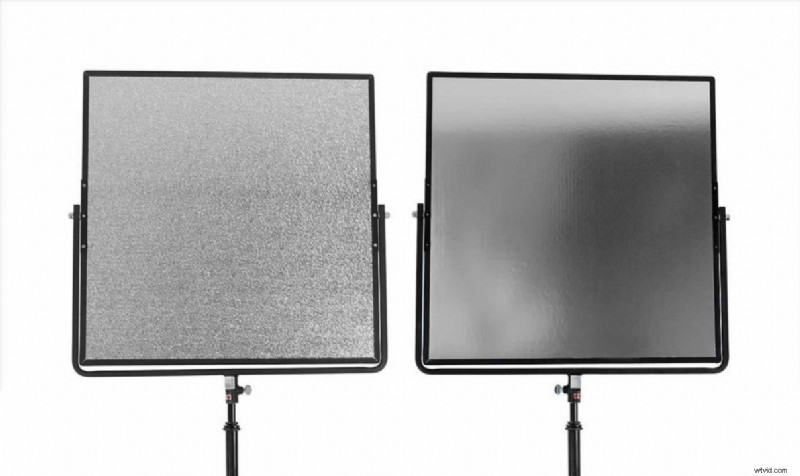
While gaffers handle electrical equipment, grips wield reflectors—often called “shiny boards”—to redirect natural light. Heavy‑duty stands, stored on the grip truck, support these reflectors. Reflective textiles such as Griffolyn or Ultrabounce further enhance light bounce, and are mounted on frames or flown from studio grids.
Further specialization
Grips increasingly specialize in custom mounts for high‑action sequences. Modern films demand camera rigs on cars, motorcycles, and boats, requiring the same ingenuity that once secured cameras on trains.
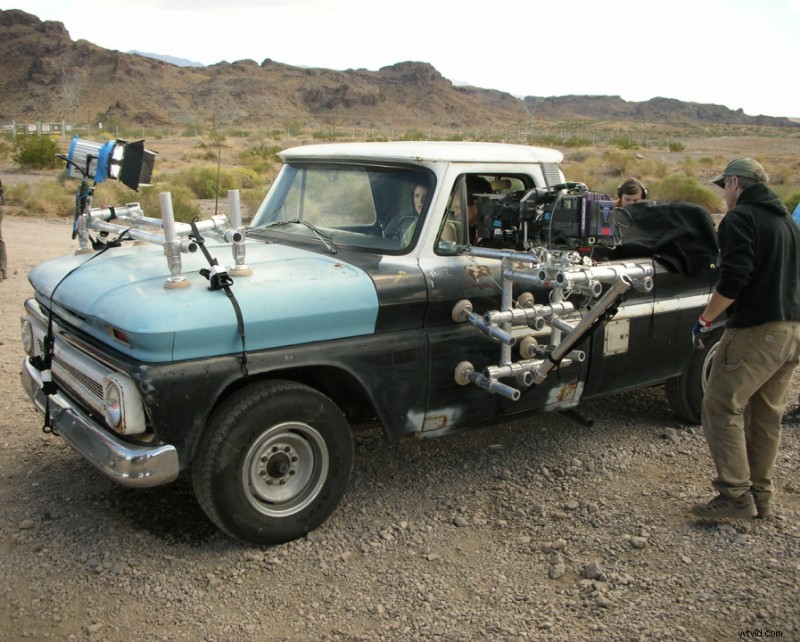
Running shots in vehicles—where the camera captures the driver and passenger in motion—depend on expertly designed rigs. Vendors such as Modern Studio Equipment provide mounting kits for these applications.
Resources and education
Curious about a career as a grip? Below are the most effective pathways to gain knowledge and hands‑on experience.
Film schools
Film schools and certificate programs offer structured curricula that cover camera support, rigging, and lighting. A degree demonstrates commitment and equips aspiring grips with industry networking, critique, and historical context. For those seeking mentorship and collective bargaining, joining a union such as the International Alliance of Theatrical and Studio Employees (I.A.T.S.E.) can be invaluable.
Union membership requires accrued permit hours on contract jobs and good communication with local trade agents. These agents often refer trainees to best boys and department heads needing assistants.
Self‑study options
Industry magazines like American Cinematographer, published in partnership with the Cinematographer’s Guild, provide insights into modern techniques. Classic texts such as Michael Uva’s “The Grip Book” (currently in its sixth edition) remain essential reading.
Notable grips and their work
Many seasoned grips have mentored generations of technicians. Charles “Tom” Hinson, key grip on Lucasfilm’s “Radioland Murders” (1994), taught foundational rigging techniques. Alan Rawlins (Interview with a Vampire, 1994) and “Chunky” Huse, known for precision tooling, shaped the author’s early career. Stuart Abrahams, Don Duffield (Sheena: Queen of the Jungle, 1984), and Jim Kwiatkowski (Bad Boys II, 2003) exemplify the technical mastery grips bring to high‑profile productions.
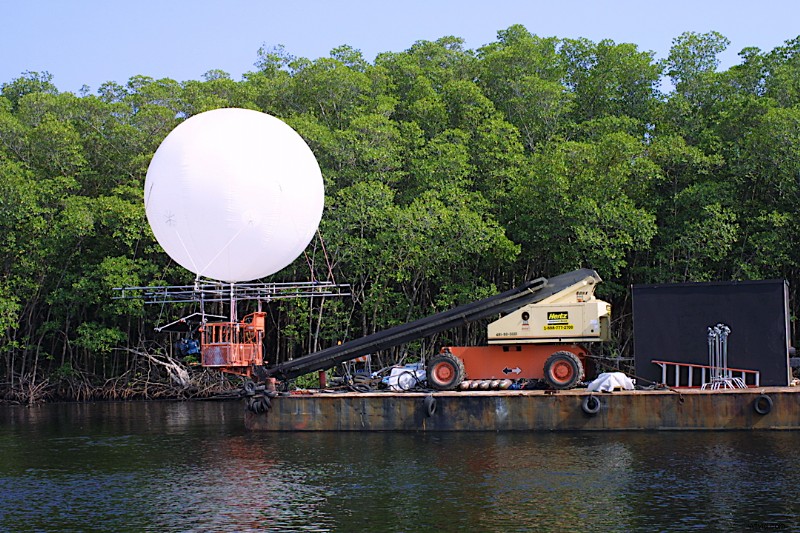
Mike Popovich, famed for complex crane and lighting balloon rigs on the “Pirates” franchise, showcases the creative possibilities of grip work. The Internet Movie Database offers detailed credits for these professionals.
The grip will remain
Grips are indispensable to the film industry, collaborating closely with cinematographers and gaffers to craft dynamic camera movement and expressive lighting. Their expertise, creativity, and adaptability continue to enhance storytelling across every genre. As technology evolves, grips will remain essential members of any production team.