
In countless moments, I’ve captured street scenes only to let them fade. As a street photographer, I’m drawn to the rhythm of human life—faces, gestures, culture. My goal, shared by many in the field, is to seize moments that resonate, to watch people in their everyday dramas and find both therapy and intrigue.
Street photography demands split‑second decisions: a clear vision, the right exposure, a composition that pulls the eye, and the shutter release. Modern post‑processing lets us layer mood and style, but the essence has evolved beyond merely capturing a scene. Today we aim to create images that are not just visually striking, but that also carry narrative weight.
There’s nothing wrong with this aesthetic pursuit—art, passion, documentation of humanity all coexist. Yet I’ve grown uneasy with the fact that our subjects remain just that: subjects. While I often try to connect—asking for names, learning a snippet of their story—the interaction usually ends with a caption. Fundamentally, we operate within what I call an “extraction model” of photography.
In this piece, I confront that model and offer food for thought. We use streets and people to create beautiful images, but what does that truly mean? Are we merely feeding our own creative appetite, or can our work contribute more?
Is our work meaningful? Does it matter?
The Myth of the Decisive Moment
Henri Cartier‑Bresson’s “decisive moment” is a revered principle in photography, yet it can also trap us. He described it as the instant when visual elements align to reveal a situation’s essence—a convergence of form and content that delivers maximum meaning.
Many contemporary photographers chase technical perfection and dramatic composition, often overlooking the social context that gave Cartier‑Bresson’s images their power. His work’s impact stemmed less from perfect framing and more from capturing moments of social change or human experience with genuine purpose and insight. It was about being there, not just seeing.
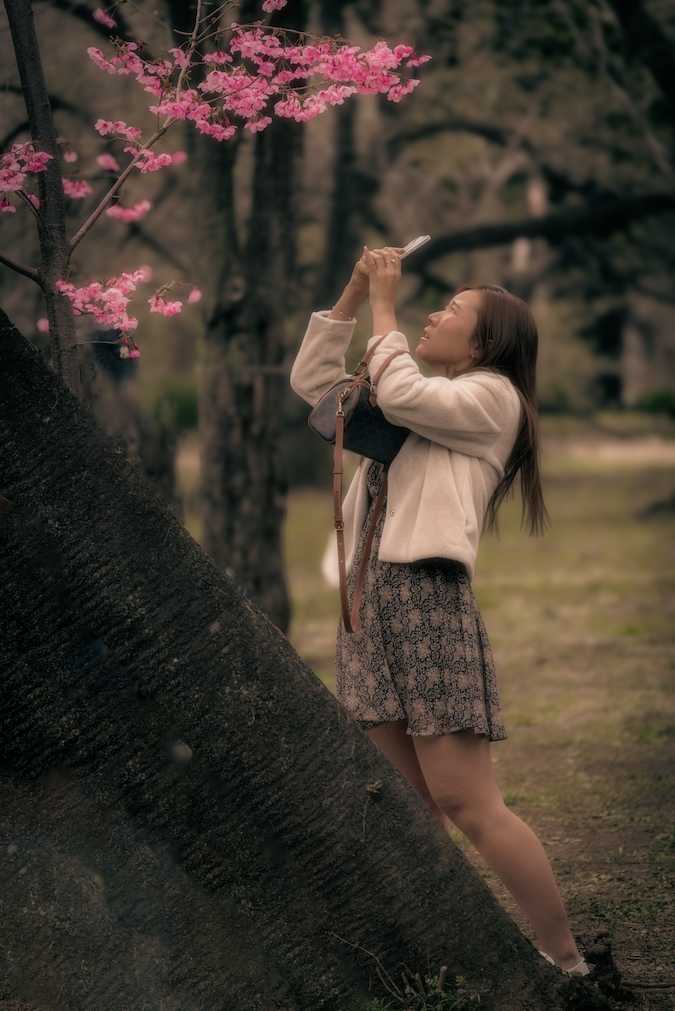 A girl taking a picture of cherry blossoms in Japan. I cannot recall any reasons behind taking this photo other than its charm.
The Ethics of Extraction
Photography often follows an extraction model: we take from our subjects—image, moment, environment—without offering anything back. We travel to distant locales, photograph strangers, and create art that may never return to the people or places captured.
Extraction isn’t inherently wrong; photography has always been about taking something from the world and re‑imagining it. The issue arises when we fail to give back, even if that means raising social awareness. The model becomes hollow without reciprocity, especially when we exploit viewers’ emotions for traction.
Whether we document indigenous communities, natural landscapes, or city streets, a purely aesthetic approach without deeper connection renders the work superficial.
I recognize many of the practices I critique in myself—this is a broader observation that may resonate with others who reflect on their own work.
The Instagram Homogenization
Social media has flattened photography into a predictable aesthetic: bold colours, high contrast, and 4:5 crops designed for small screens and short attention spans. Algorithms reward visual impact over conceptual depth.
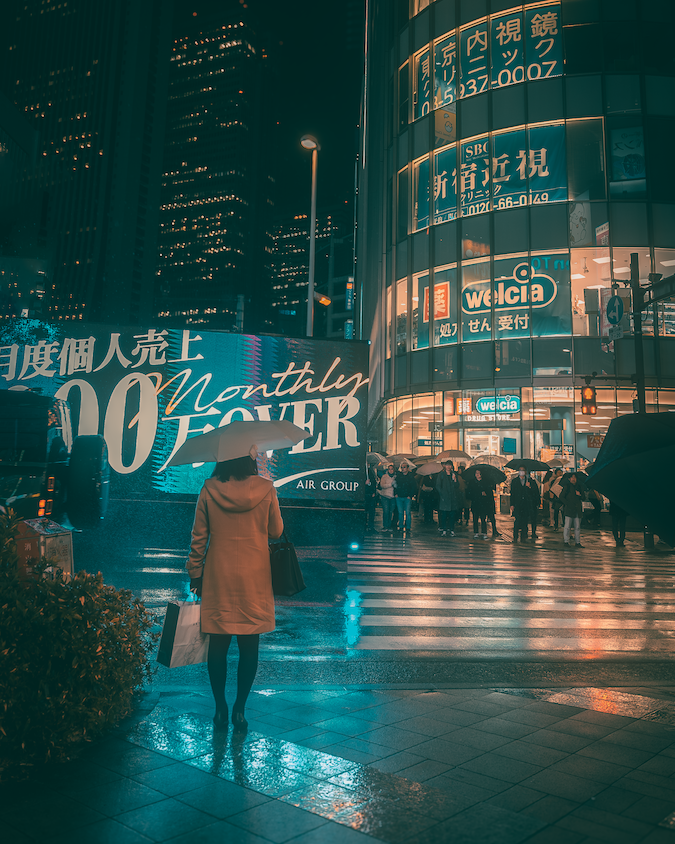 Following the trend of teal & orange in the editing process, with a 4:5 crop for Instagram
This trend produces technically proficient photographers who lack a meaningful message. They master tools but neglect purpose, perfect technique while abandoning the story.
The Question of Purpose
Two recent experiences pushed me to rethink my approach.
Madagascar
During a visit to rural Madagascar, I was photographing children waiting for vaccination when my friend shouted, “Muji, take this shot.” He pointed to a boy wearing a homemade handbag made from a chicken‑flavoured packet, contrasted against designer bags worth thousands of dollars. He wanted to post it on Instagram to highlight disparity.
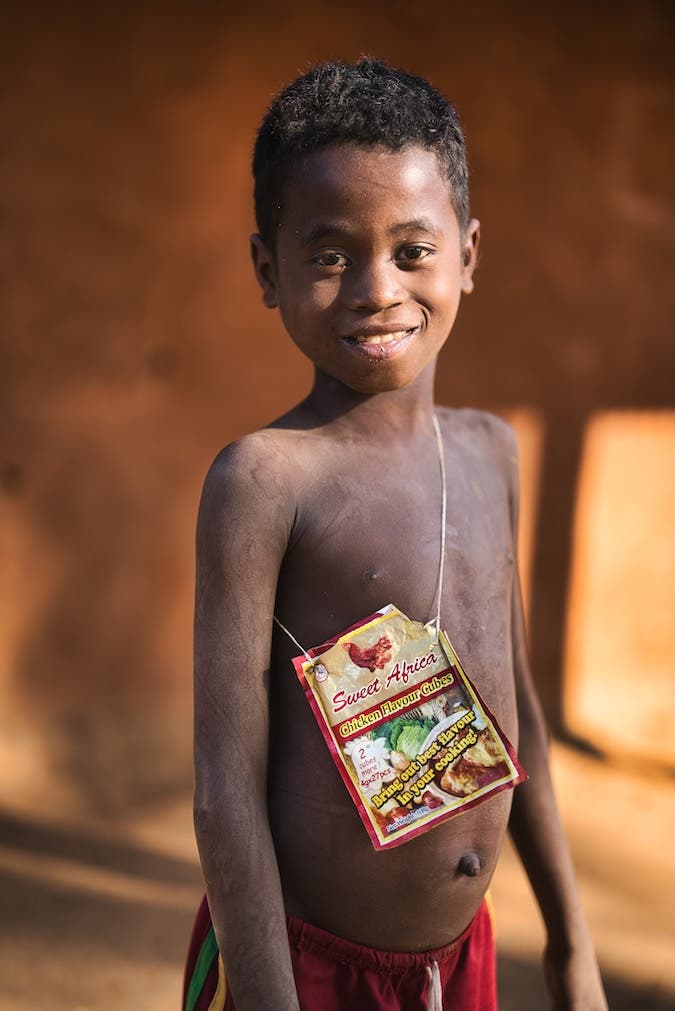 Handbag made with a chicken‑flavoured cubes packet: the smile hides harsh conditions in which Malagasy people live.
We looked around and saw no clean water, no electricity, and children struggling to survive. The image felt like a shallow contrast rather than a catalyst for change.
Photography Workshops in Underprivileged Areas
Recently I explored the work of Bangladeshi photographer GMB Akaash, who runs workshops in low‑income communities. His initiative directly benefits locals through skill‑building and economic opportunities, supported by Patreon. This reciprocity is what makes photography meaningful.
These moments forced a hard question: why are you photographing this scene? If the answer is “cool look,” “perfect light,” or “portfolio building,” you’re operating within the extraction model.
How to Make Your Street Photography Meaningful
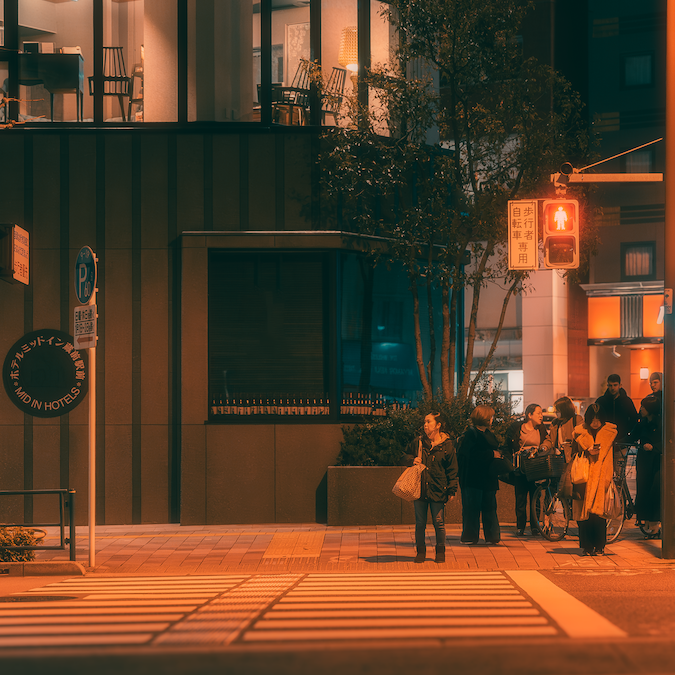 Sleepless in Tokyo – Reflecting on my trip, I wish I had taken a series of photos of people returning home late at night. Some of them were so exhausted that they slept on the train and missed their stops.
Here are practical steps to move beyond extraction:
Learn Names and Stories
Take the time to learn the names of people you photograph and, if possible, a glimpse of their lives, struggles, or hopes. This turns subjects into collaborators and creates accountability in representation.
Collaborate, Don’t Just Capture
Invite your subjects into the storytelling process. Show them the images before publishing, ask for input on captions, and consider their perspective on how their story should be told.
Research Context Deeply
Before you enter a community, study its social, economic, and political backdrop. Understanding these forces enriches the narrative you capture.
Measure Impact Beyond Likes
Ask whether your photography helped the community, fostered understanding, or sparked positive change. If not, rethink your approach.
Spend Time, Not Just Moments
Rather than chasing fleeting shots, commit to regular visits to specific communities. Building familiarity adds depth to your work.
Give Back Tangibly
Find ways to contribute—share exhibition profits, volunteer your skills to local NGOs, or gift printed photographs to the people you photograph.
Use Your Platform for Amplification
Leverage social media or exhibition opportunities to elevate the voices and causes of the communities you document.
The aim isn’t to abandon aesthetic quality but to infuse every image with purpose beyond personal satisfaction.
The Path Forward
Photography is a powerful medium when approached with seriousness. The world offers countless stories that deserve more than perfect exposure—they require time, research, relationships, and respect.
True impact comes when photography creates understanding, exposes underlying forces, and engages the conscience. Meaningful images are remembered, discussed, and acted upon, not merely admired.
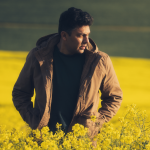
Mujahid Ur Rehman
Mujahid Ur Rehman, known as Muji, is a professional photographer and independent filmmaker based in Cape Town, South Africa. He focuses on storytelling through photography, short films on YouTube, and a newsletter covering life, people, travel, nature, and motivation. View his work at www.mujahidurrehman.com, @muji.drifts, or YouTube channel.