
Film and video professionals can sound like they’re speaking a foreign language on set. Here are some helpful translations to help you keep up.
Cover image via fabiodevilla.
“Gaffer.” “Best Boy.” “Stinger.” Do you have any idea what those three words mean? Well, if you haven’t worked in the industry, probably not. Filmmakers have a weird tendency to use phrases and nicknames for things that already have normal names. It’s a tribal right of passage to learn all of the lingo so you can use it on set to communicate with your fellow filmmakers.
Worried that you won’t know what something is your first time on set? Well, we’ve compiled a list of terms commonly used in the industry that you will help you decipher this new language.
Job Titles
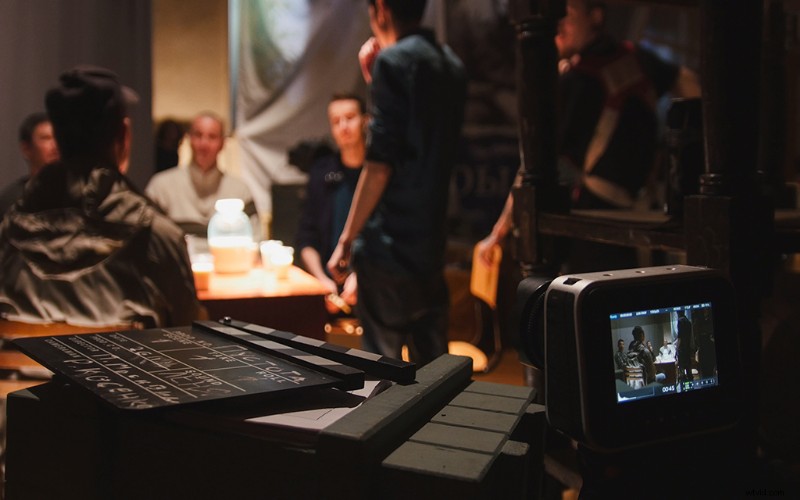
Image via Studio 72.
Gaffer — The lead electrician on set. This is the person who plans the rigging of all of the lights on set and makes sure no one else touches the dangerous stuff. Lights are powerful, and electricity is scary.
Best Boy — The second in command to the gaffer. This phrase comes from old Hollywood — when a lead would ask for help from another department, they would say “Send your best boy.”
Grip — The people on set who rig all of the camera setups such as dollies and cranes — as well as any other setups.
Key Grip — The lead grip.
Executive Producer — The bankrollers of the film. Usually a big name who ties themselves to a project that they believe in and contributes money to get it going. Sometimes, there are creative executive producers who offer filmmaking input without being on set.
Producer — The producer is the lead of the business side of the film. Producers hire people, organize shoot days, and generally create the film’s production timeline.
AD — The assistant director. The AD is the one who does everything the director doesn’t have time for — things like day-to-day scheduling, organizing extras, and preparing call sheets for the actors.
DP — The director of photography. This is the lead cinematographer on the film. They are the ones who plan every shot and work closely with the director to translate their vision into what the camera actually captures.
Production Designer — The production designer creates and builds all of the sets. They work with the director, the DP, and others to plan the set dressings and costume choices to achieve a certain look for the film.
Script Supervisor — The person who makes sure that every take maintains continuity. They are the ones who have a copy of the script and read along during takes to make sure that every line of dialogue is accounted for.
Crafty — Craft services. This refers to the snacks, drinks, and small meals available on set. This is different from catering, which handles full meals.
Items on Set
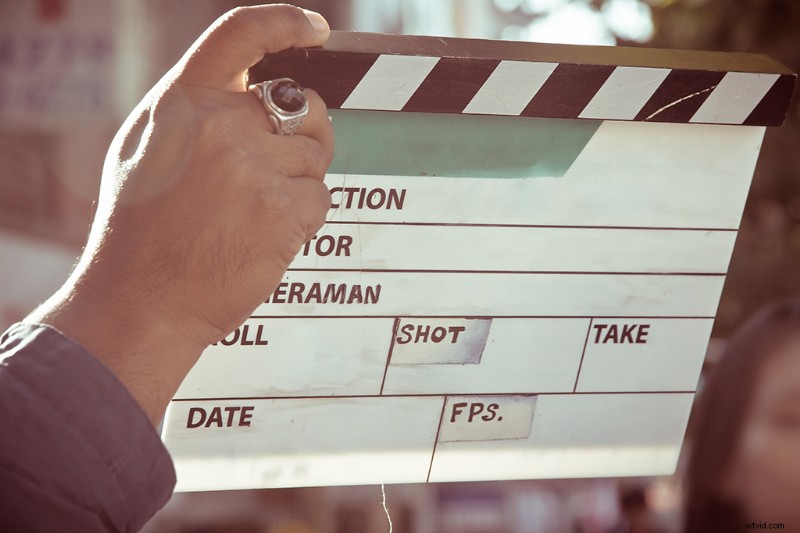
Image via ponsulak.
C-Stand — A three-pronged metal stand that holds up just about anything on set, such as lights, flags, etc.
Gaff Tape — A cotton-backed adhesive tape with high heat resistance.
Boom Pole — A pole that holds a microphone at the end, used to capture sound from the top or bottom of the frame.
Shotgun — A microphone (typically used on a boom pole) that captures sound in narrow range.
Sticks — A tripod (“Hand me the sticks”).
Plate/Biscuit — The connection plate that connects the tripod and the camera.
C-47 — A wooden clothespin. Used for clipping gels and diffusions to lights.
Platypus/Quacker — A duck-billed clamp used to hold large boards and planks in the air.
Stinger — An extension cord.
Snoot — A tube that controls the radius of a light’s beam.
Floppy — A large, black, square tapestry used for blocking out a light source.
Flag — A device that blocks light.
Diffusion — A square white sheet used to diffuse, soften, and spread light coming from a source. Great for getting rid of harsh lights on set.
Gel — A square of colored plastic material that is placed in front of a light to change its color.
Scrim — A metal-gated circle placed inside of a light to soften its output.
Bounce — A white reflective object used to reflect softer light onto your scene.
Dolly — A device used to roll a camera from point A to point B.
Cookie — An object with cut-outs that allow light to pass through to create a certain look, such as curtains or trees.
Dead Cat — the fuzzy thing over a shotgun mic on top of a boom that cuts out wind noise.
Zeppelin — A puffy case that goes over a microphone to cut down wind noise.
Slate/Clapper — The black-and-white board you see at the beginning of a take with the scene and shot number on it. This is used to sync audio and video in post-production.
Phrases
Image via gnepphoto.
“Striking” — What you say when turning on a light on set. This warns the crew to not look directly into the light when it is switched on.
“Rolling” — What the camera operator says when they begin recording on the camera. This comes from film since it actually rolls through the camera.
“Speeding” — Also a term used to indicate recording, but for digital. This is currently the more commonly used phrase.
“MOS” — or “Mit Out Sound,” translates to “without sound.” This is when you record a take
“Reset and Cut” — When the director says cut, all recording stops, and the take is over. When the director says “reset,” the actors reset to the beginning of the take but recording resumes.
“Martini Shot” — The final shot of the day.
“Soft Sticks” — You say this when you have a close-up and you need to slate. It reminds you not to clap the slate too hard in front of someone. It’s rude.
“Soft 5 and Hard 5” — A 5 indicates a small break on set. A hard 5 means that it’s exactly 5 minutes (sometimes under), and a soft 5 means that it’s a bit more vague.
“10-200” — Code for going to the bathroom.
Looking for more filmmaking tips and tricks? Check out these articles.
- 9 Essential Cuts Every Video Editor Needs to Know
- Three Cheap Ways to Diffuse Light on Your Next Shoot
- Video Production 101: How to Edit Your Own Video Clips
- Video Breakdown: How to Minimize Your Lighting Set-Up on Set
- DIY Filmmaking: How to Get the Shot with These Simple Builds