
As filmmakers, we must often create the unreal and fantastical look like everyday life. One of the oldest tricks in a filmmaker’s repertoire is projection — a technology that grew from a very simple concept into an impressive application.
Let’s explore the history of projection technology, from the original rear-projection setups to more advanced front-projection techniques.
Rear Projection
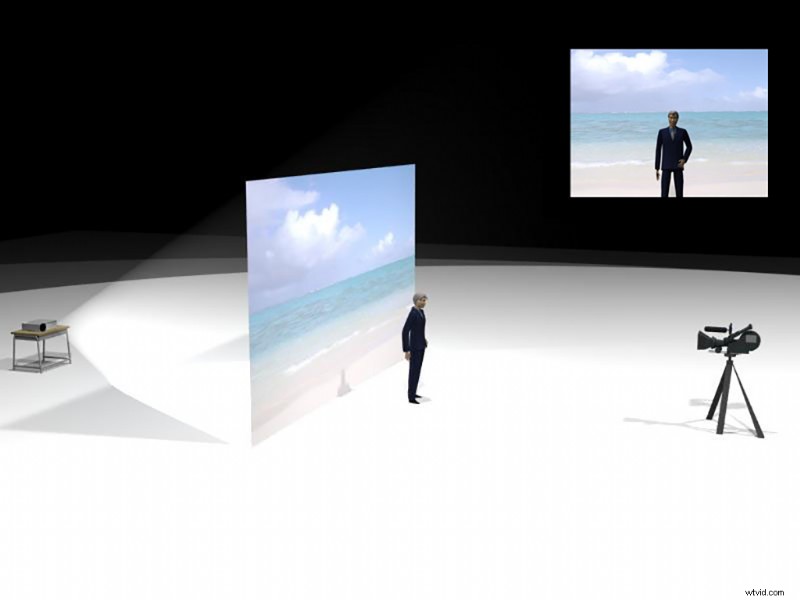
Image via Wikipedia.
First used in the 1930s on films like Liliom and Just Imagine, the rear projection technique is exactly as straightforward and simple as it sounds. You’re probably most familiar with seeing it in film backgrounds, such as landscapes passing by in moving cars or simulated flight. One big breakthrough in true rear projection was The Hansard Process (or Optical Printer process), which famously created the tornado in The Wizard of Oz.
You can see examples of the technology here.
Front Projection
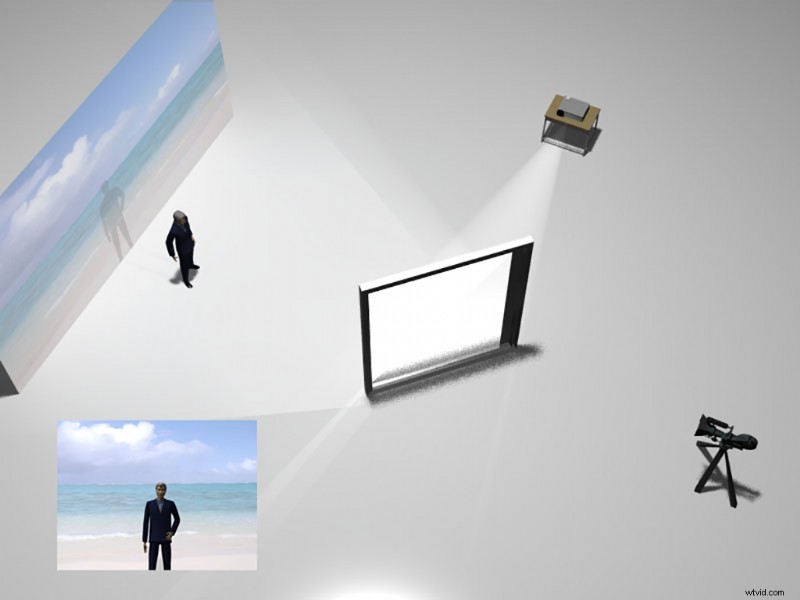
Image via Wikipedia.
While many mistakenly think Stanley Kubrik invented front projection for 2001: A Space Odyssey, it actually has an older story. 3M Corporation projectionist Philip V. Palmquist invented the technology in the late 1940s. However, it wasn’t until the 1960s that the technique began to go mainstream. Front projection, like its name implies, usually works in conjunction with rear projection by adding another projection in front of the cameras subject(s) which projects pre-filmed material over performers and onto a highly reflective background surface.
You can see how the technology works in this featurette.
Zoptic Projection
Zoran Perisic invented another, more advanced, version of front projection to make Christopher Reeve’s Superman fly. The technique involved placing a zoom lens on both the camera and the projection to simulate changes of speed and perspective. The Zoptic process also featured in Return to Oz, Radio Flyer, and Deal of the Century.
Introvision Projection
Another advancement in front projection appeared with the Introvision process in the early 1980s for the Sean Connery film Outland. The technique, which featured two front projectors and three half-silver mirrors for reflection enabled a combination of foreground, middleground and background elements in camera. The technique was quite successful for dangerous stunts in films like The Fugitive and Stand by Me.
For more information on projection techniques — as well as more advanced techniques like green screen compositing — check out these resources.
- How to Use a Green Screen
- The Colorful History of Green Screen Compositing
- VFX Breakdown: Sky Replacements
Top image by Agata Kowalczyk.