
2016 may very well be remembered as the make or break year for virtual reality and 360-degree content.
At the beginning of the year, the NAB 2016 show revolved around 360 cameras — so it was only a matter of time until we saw an influx of content. YouTube and Facebook were the first two major platforms for playing 360-degree content, and 2016 proved to be a major year for both companies.
In 2016, YouTube expanded the VR experience by introducing live 4K 360-degree streaming, spatial audio, and the much-anticipated VR update for iOS devices. Previously, only those on Android devices could view content on their phone and Google Cardboard. YouTube’s parent company, Google, also invested heavily in the future of 360. Google’s new Pixel phone was designed to work with the new Daydream VR headset.
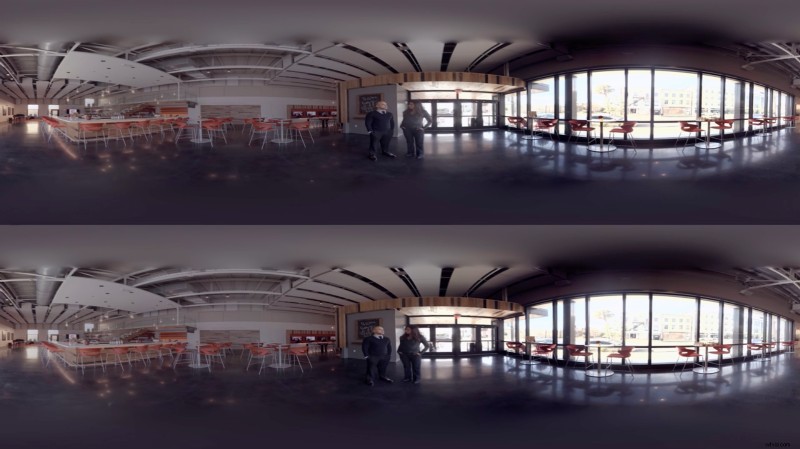
Not to be outdone, Facebook brought 360-degree content to their Instant Articles. They also acquired their own spatial audio company to help build on their Oculus experience. Facebook’s 360-degree video and photo platform also received a major boost in December, as they announced live 360 video streaming. As for Oculus, apparently efforts are being shifted into two directions — one focused on the PC experience and one on mobile. Oculus CEO Brendan Iribe stepped down to take on the leadership role of the PC division. The Facebook mobile VR experience will go head to head with Google’s new initiatives.
On the creation side, just about every camera manufacturer from GoPro to Nokia are developing better 360-degree cameras and rigs. Still popular are the cheaper options like the Ricoh Theta S, which is an all-in-one single 360 camera. Its success has helped pave the way for new products like Giroptic’s iO camera that connects a 360 camera to a user’s smartphone.
As for editing these new categories of content, Adobe has taken huge strides in bringing 360-degree and VR editing to Premiere Pro and After Effects. It builds upon the relationship Adobe had with other companies like Mettle — the creators of Skybox Studio. At the 2016 Adobe Video World, I had the chance to have lunch with the Adobe VR team and some of today’s top creators — like Supersphere’s Lucas Wilson.
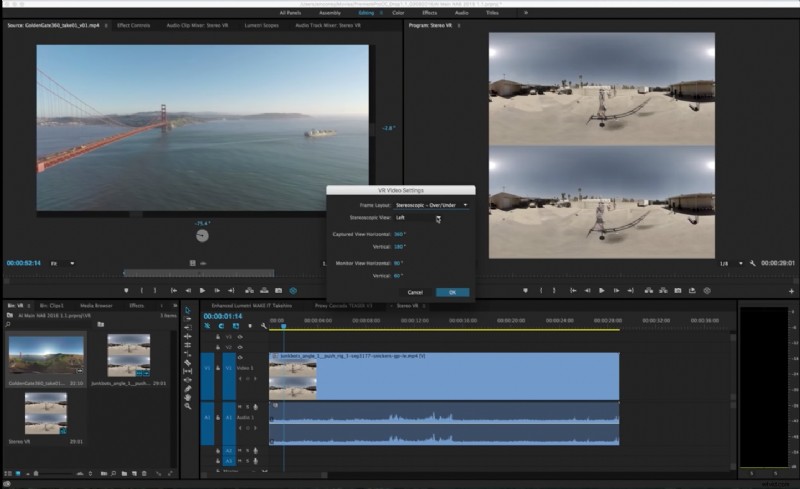
Wilson was quick to compare today’s VR experience to the wild west, as there is massive demand for content that’s never before been captured. Just imagine Shutterstock’s massive 100 million image archive being reshot in 360-degrees. That’s what today’s VR creators need. And it’s not just visuals — it’s audio, transitions, graphics, overlays. Everything has to be reengineered for 360. (Wilson knows what he’s talking about. He’s created content for nearly every VR platform and for clients like Paul McCartney, Michelle Obama, NBC, and Fox.)
Today, much of the available VR content is being produced by brands and major corporations. The recent Macy’s Thanksgiving Day Parade was brought to viewers in 360 by NBCUniversal and Verizon. The stream was available on Verizon’s YouTube channel.
The National Basketball Association has invested heavily in VR, streaming one basketball game every week in 360 degrees.
“It’s been established pretty clearly by Adam [Silver, the NBA commissioner] that not only innovation generally, but VR specifically, is strategically important for the NBA.” — Jeff Marsilio, NBA VP of Global Media Distribution

The NBA games are made available to watch at anytime for those with a League Pass. Perhaps the biggest future potential is the ability to recut games as dramatic VR short films, like Follow My Lead: The Story of the 2016 NBA Finals.
“In addition to bringing basketball fans closer to the action of the unforgettable 2016 NBA Finals, both in the games and off the court, the mini-documentary could serve as an example to VR filmmakers of how to best use the nascent medium to its full potential” — Polygon
The NBA has long been working with NextVR, a company that has since broadcasted Major League Baseball’s Home Run Derby in VR and a series of professional football games for the NFL.
Finally, as far as consumers are concerned, there are still several ways to ingest VR content. From popular platforms like YouTube and Facebook, to the exclusives of Oculus, Jaunt, Samsung VR, HTC Vive, and Playstation VR — there seems to be an influx of content.
Don’t let this fool you. Much of the content is exclusive to certain headsets. Google’s Cardboard and Daydream have content you may not find on an Oculus Rift or HTC Vive. Oculus has exclusive distribution of its own Oculus Story Studio content.
Staggered content that is not cross platform is a serious issue for the future of VR. As long as a majority of the content remains brand-sponsored ads, it begs to ask if consumers are even willing to engage. Only the future will tell.