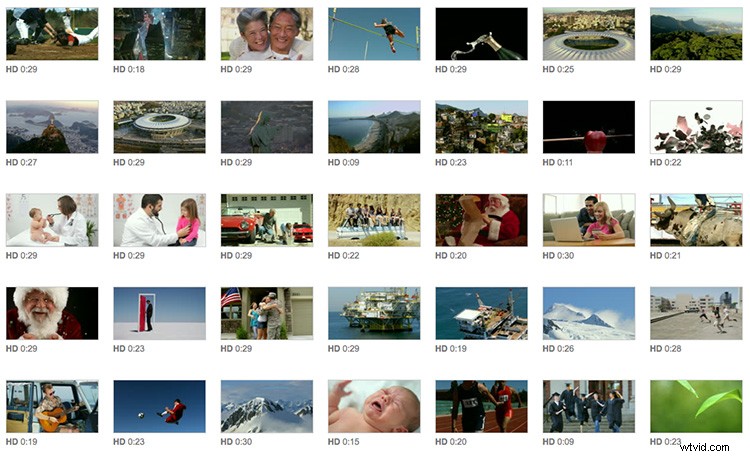
After years of focusing on photography, Daniel Hurst discovered the allure of video and was immediately hooked. In 2007, he launched his own production company, VIA Films, and is now among the newest contributors featured in the Shutterstock footage collection.
VIA Films has already licensed over 100,000 clips to clients including Coca-Cola, Sony, Disney, Samsung, Nissan, and Warner Bros., and with the collection new to our site, that number is set to rapidly grow. We caught up with Hurst to welcome him aboard and ask some questions about how he creates such consistently great footage.
Shutterstock: How did you get started in footage production?
Daniel Hurst: My background is in still photography. I started out working as a photojournalist, then eventually transitioned into commercial and stock photography. In 2006, I started experimenting with time lapse, and that’s when I really started shooting video. From that point on, I changed my focus from still photography to stock footage. At first, I thought video would be an easy transition, but it proved to be much more than I anticipated. That’s actually what drew me to shooting video — the challenge, and constantly learning new things.
Times Square footage by VIA Films
What tips can you provide for other photographers for making that transition?
Video is a team effort — that’s one of the first things I learned. Coming from still photography, I didn’t realize how many more parts there were to a video shoot. My advice for someone making the transition would be: Don’t expect to do everything yourself; surround yourself with people in the industry who are experts in their field. Be open to sharing more of the responsibilities. This has been one of the best parts about shooting video for me — getting to work with a team and learn from others.
On the technical side, I would recommend that photographers try new things: implement camera motion into clips; experiment with different ways to move the camera — handheld, sliders, jibs; experiment with mounting the camera on different moving things.
Road Trip footage by VIA Films
Tell us about your production company, VIA Films.
My previous production company, Morgan Lane Studios, was a partnership between me and my friend Luke Miller. Our goal there was to push ourselves to constantly improve the quality of our clips, but also to have a lot of fun along the way.
My goal with VIA Films is very similar — if I’m shooting what I enjoy and pushing myself to improve, I think it will show in my work. The VIA Films collection includes slow motion, aerials, travel, and authentic lifestyle footage. I hope to expand my website to not only show our latest work, but also to behind-the-scenes features and articles directly related to stock-footage shooters.
Helicopter footage by VIA Films
How did you first get started shooting in slow motion?
I had previously done some high-speed still photography, so when I got into video, that’s something that I wanted to explore. I tried some cameras that shot 60 and 150 frames per second, but found that the effect was not slow enough for splashing liquids and other subjects that I wanted to shoot. I ended up renting an industrial camera from a company in Germany that was designed for filming automotive crash tests; the camera was very cumbersome and difficult to shoot with, but the results were mesmerizing — I was hooked.
Today I shoot with a Phantom HD Gold slow-motion camera that can shoot 1000 fps at full HD resolution. The camera can run on batteries and doesn’t require being tethered to a computer. It’s much more user-friendly than the industrial high-speed cameras.
Motorcross footage by VIA Films
Baseball Celebration footage by VIA Films
Do you have suggestions for contributors on learning to use new equipment?
One of the things I really enjoy about shooting stock is that I have the freedom to experiment with and learn about new equipment. There isn’t the same pressure you get from working with a client, so you’re free to experiment and try new things. Renting can be a good way to evaluate a new piece of equipment before you purchase.
I would also recommend networking with people in the industry who have experience with the equipment. There are a lot of great blogs, forums, and online tutorials that can be invaluable, too. A couple of my favorite blogs relating to equipment are nofilmschool.com and fstoppers.com. I’ve also found the Reduser forum to be a great place to learn and get information, both on Red cameras and cinematography in general.
Tractor footage by VIA Films
How did you learn how to shoot aerial footage?
I‘m really new to shooting aerials. Just like with high speed, I had previously shot some aerial still photography, and shooting aerial video is something that I really wanted to learn about. I’ve experimented with a variety of setups for shooting aerials — everything from small remote helicopters to handheld gimbals out the side door of a helicopter, to renting large mounted gimbal systems like the Cineflex. They all have their pros and cons, but I have especially enjoyed working with the Cineflex because it allows a lot of zoom range and very good stabilization. Also with the Cineflex, I’m typically working with a camera operator — this allows me to focus on directing and planning shots.
Aerial Glacier footage by VIA Films
What’s the biggest challenge in shooting aerials?
From a technical standpoint, stabilization is the most challenging part. It’s always best to have some type of gimbal, but if that’s not an option because of budget, there are still many things that can help. Keeping the lenses fairly wide angle and using software to stabilize can help a lot.
Weather can also be challenging when shooting aerials: wind, temperature, fog, and haze are all factors that have to be considered, in addition to normal weather factors.
Christ the Redeemer footage by VIA Films
Do you have any tips for working with models or actors?
One of the biggest challenges in working with actors is getting them to relax and act natural. I try not to provide too much direction to actors; I usually give them a general idea of what I’m looking for then let them just have fun and improvise. Some of the best and most natural shots happen when actors are just being themselves and enjoying the moment. I also try to involve the actors in the process. I stay open to actors’ ideas, and will sometimes play back shots to show them; this really helps them understand what I’m seeing, and can help them feel confident in what I’m shooting. When an actor tells me that they had a great time on a shoot and that it didn’t even feel like work, that’s when I know that we got some great shots.
Sailboat footage by VIA Films
Do you have any personal favorite shoots or clips?
Some of my best experiences shooting stock were when I’ve been able to travel and work with my family. Earlier this year, I was working in Dubai, and my family came over to vacation at the end of my trip. My 8-year-old son and I decided to go out in a hot-air balloon over the Arabian desert — something neither of us had done before. We woke up hours before sunrise and drove out to the desert, only to find out the wind was too strong to fly that morning. The following morning, we decided to give it another try, so we woke up and drove out again. The wind was still very strong, but the pilot decided to give it a go. Takeoff was difficult, but once we were up in the air, everything was so calm and quiet. We watched an amazing sunrise over the desert, and I was able to get some great shots.
Arabian Desert footage by VIA Films
What do you think of the future of stock footage?
Stock footage has a very bright future. Demand will continue to increase as more and more advertisers move to using video on the web and on mobile devices.
Statue of Liberty footage by VIA Films
Explore the full VIA Films portfolio on Shutterstock »