
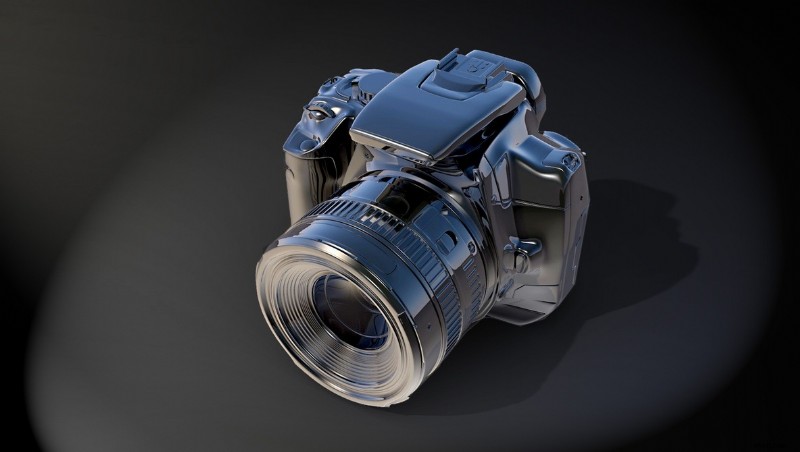
When I look at product photography and video in the fashion and beauty product industry, many of the shots are now computer-generated. It might be at a steep cost initially to get the team to create the products in 3D space, but once that’s done, the product can be used in any scene you need for the client. Are we beyond photography?
With photography, each scene or idea will need to be planned and shot individually. It’s a long-term cost-saving approach. There’s also no retouching needed, where dust or fingerprints need to be removed.
With regards to setting up the scene, it’s possible to get exactly the same type of lights we’d use in the studio, and you can choose the focal lengths of the lenses, their aperture, and the shutter speed you’d like to shoot at. You can simulate water, textures, and shapes, and it’s now at a point that makes it very hard to distinguish between real and virtual spaces.
Once you’ve done the modeling and have your scene set up, adding motion is another part of the process, where a 3D graphics artist can provide a client with video, stills, and effects that we as photographers might not even be able to do in a real studio. They can set up multiple cameras and have the cameras move as they wish to get the shots needed to put a video together.
Photogrammetry is also now becoming more accessible, with us being able to use our phone’s cameras, walk around an object, and by using its LIDAR (Light Detection and Ranging) technology, measures the size and shape and recreates it virtually, so modeling of the object is also almost not needed to be done anymore. It can be transferred to the 3D design application within a second.
Where I See It Affecting Us as Photographers
Furniture Design Photography
IKEA already does all its catalogs in 3D. They might look like photos, but they’re not. These pieces of furniture have been designed using 3D applications, so rendering them for publishing is a mere step in the process.
Food Photography
This is a tricky one to master, but if you can buy a stock 3D burger online, modify it to suit your client’s restaurant, and share the stills and video, it might be difficult to justify shooting the burger and hiring a team to help giving it a movement for a video. I’m not saying it’s going to be the only option, but 3D graphics can simulate food, so you might have some competition from non-photographers too.
Architectural Photography
Just like with furniture design, the buildings have been designed using AutoCAD, so flying over them and letting the clients move through them virtually is also just another step in the process.
Shoes, Fashion, and Beauty Product Photography
There is a photogrammetry-based mobile app that focuses only on shoes, so sellers can give their clients a 3D view of the shoes they’re interested in.
If the product is simple to model, it might be cheaper for the client to use a 3D team to generate the graphics and video-based media for their campaigns.
Where Will Photography Still Be Needed and Relevant?
It’s hard to say for now. Just like the artists using paint and pencil were threatened by the advent of photography, it’s now CGI that will come at photography and take on the industry we’ve crafted for the last century.
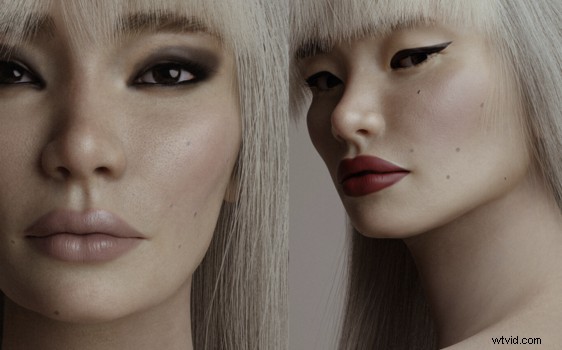
But it's not a zero-sum game. There are places photography will be the preferred medium. One of the spaces I believe photography will remain needed is when people are involved. I don’t know anyone who cannot distinguish between a computer-generated human simulation and a real person. And with that said, people respond better to people. We identify with each other, and it might be fun seeing a good 3D interpretation of a person, but it’s not the same thing, and I don’t think it will be soon. So, events like weddings, corporate gigs, sports, and shoots, where the person being photographed is of significance will allow photography to keep its relevance.
One of our writers has actually started a modeling agency consisting of computer-generated models.
It will still be important for us to express ourselves in Abstract ways. When photography changed art, artists looked at expressing their ideas by moving away from realism. Cubism and abstractions are examples of this. It will be the same for photography compared to 3D graphics, although these applications can make abstractions quite easily. But, the idea of having an idea in your head and executing that idea with photography will certainly be of value to the art-loving communities across the world.
And then, photography democratized art, and it did that with portraiture and documentation of the world. Being part of history and having your portrait taken was now possible, and this gave birth to the documentation of life in the streets. The cultural aspect of the people who give energy to the cities and world cannot be replaced virtually.
Comparing the Jobs
Photography is almost a 50/50 split between desk work and shooting, so it’s well balanced in that sense. I’m not going to become a Cinema 4D specialist. I’ve played around with it, but in the end, you’re bound to your desk, and although you might see the shape visually, the enjoyment of color and beauty in the real world and photographing it is much more rewarding to me.
It might seem simple now, but learning what aperture does, what ISO means, what shutter speed does with regards to exposure are all quite technical. Then, you have composition, expression, being in the right place at the right time, and letting the viewer be calm and view the world through someone else’s eyes for a moment. And we can all agree that there is always something new to learn and try.
When compared to learning a 3D graphics application, you’ll need to model, build the scene, light, and color objects in your project, and each one of these parts is almost a specialty in itself and will take time to master.
Comparing the cost of each profession is also something worth looking at. We all buy our cameras, and it’s a once-off purchase for an average of five years. We invest in the lenses, and then, we subscribe to the Adobe Creative Cloud or Capture One monthly rental. With 3D, the application rental is almost $100 per month, and then you also need to rent the rendering engines and plugins, so we’re looking at about $150 per month. It’s not far apart, but the graphics artists don’t have to buy the cameras or lenses, and they don’t need a studio.
Conclusion
The idea of the article was not to be upsetting or tell everyone that their passion for photography is a waste of time. We all know the joys of going out shooting, bringing back some winning shots, and getting to enhance them in Lightroom, Photoshop, or Capture One. It’s one of the best jobs in the world. The aim was to inform you about what could change the landscape of our professions and how to be prepared for it.