
For a few years, the names in the game of digital video technologies have remained pretty constant, especially in the professional or prosumer category. It’s not often you have a company jump onto the scene swinging, promising to release what could be one of the most versatile systems to hit the market in a while; this is exactly what Craft Camera has done. Purchasing isn’t available yet but they are taking reservations now and shipping out the first units off the line as early as December.
Where Did They Come From?
Craft Camera first popped onto my radar as I was scrolling my feed on the book of face, and among all the other useless sponsored posts that inevitably pop up, I saw the link for Craft Camera and had to give it a click to see what exactly it was. Upon following the link to Craft Camera's Website, I was greeted with an ominous "coming soon" screen with a vague release date of April 2016. I did a little digging and discovered that Craft was actually launched back in 2015 and had the goal of creating a budget friendly but high quality 4K cinema camera. Fast forward almost a month exactly after I first saw that advertisement on Facebook and all of the sudden they’ve sprang the secret onto the internet, and what is it exactly?
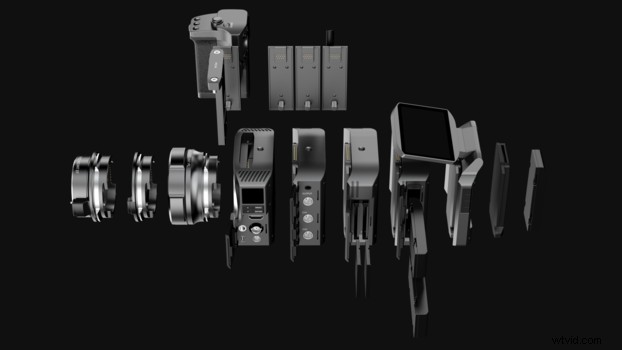
A quick trip to their newly updated website reveals their idea for an affordable and modular camera system that promises HD and 4K resolution CinemaDNG and ProRes Formats, with more formats to be available in the future, in a compact format that can be expanded and modified to fit your individual needs. How does it work? Well, each piece of the camera is sold separately but is still compatible with the other pieces, aside from recording bays which are only compatible with the appropriate Video Element, 4K Video Element Storage with the 4K Video Element and HD Storage with the HD Element.
How Does It All Work?
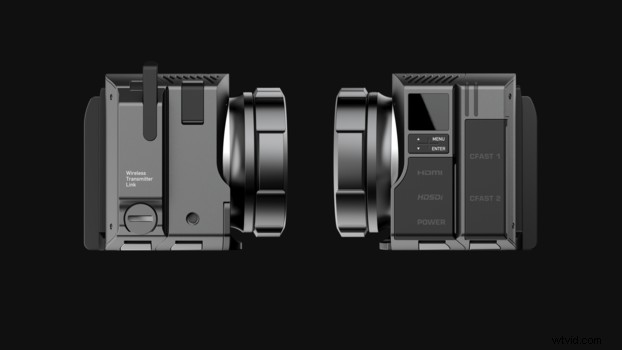
Where to start? Well first you need to decide what kind of footage you’re going to be shooting, are you going to be shooting mostly HD format type media, or will you be shooting 4K resolution video as well? You’re given the option to purchase either the 4K Video Element or the HD Video Element, the purchase of which includes your choice of lens mount between EF, MFT, or PL Mounts included in your purchase. I think one of the differences here though from other camera systems is the ease in which you can change mounting options very quickly and easily. Lens mounts can be quickly removed and replaced from the Video Element with absolutely no tools, making using a wide variety of lenses a snap (no word yet if the lenses will still retain their auto focus or aperture control features should the lenses you use have those options). Upon delivery, the Video element will have no batteries or on board storage, but you will at this point, assuming you purchased a 4K Video element, be able to record 4K Video to an external recorder via the built in SDI and HDMI ports on the side of the Video Element, out of a unit that’s extremely compact and lightweight. This configuration has been dubbed as their Action Camera (see above photo) set up by Craft Media which I’ll go into more detail further down in the article.
The Video Elements
The HD Video Element utilizes a Super 16mm CMOS Sensor recording maximum resolution of 1920x1080 pixels at maximum resolution while the 4K Video Element uses the more standardized Super 35mm CMOS Sensor, recording 4096x2160 Pixels at max resolution. The Video Elements are said to support the commonly used frame rates starting from 23.98 FPS up to true 60 FPS, but also able to record up to 120 FPS. Both Video elements will also be able to capture 13 Stops of Dynamic Range, and as a bonus, both video units have a space for an ND (Neutral Density) Filter sled, which, while not as convenient as some cameras that have built in ND Filters, is still easier and simpler to use, rather than carrying specific filters for different lenses.
The "Extras"
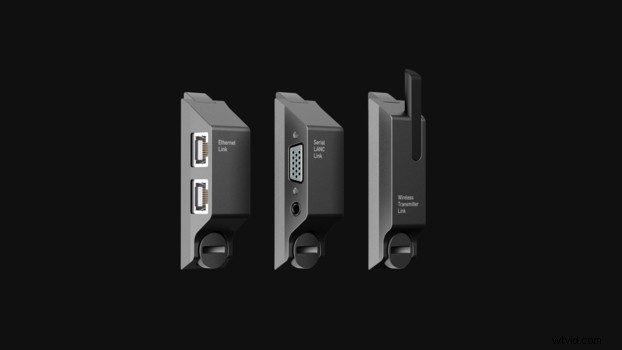
From there the options are essentially linear, you can purchase on board storage in the form of a CFAST card system that attaches to the camera with mention of an SSD system coming available soon. Want to be able to use the camera on the go without a large power pack or being tied into to a wall outlet? You can purchase a Dual Bay Battery add on. Planning on hand holding your camera? You can buy the handle unit that offers most core camera features at the touch of a button and can be attached to the side of any of the modules with the exception of the LCD Monitor unit. The LCD Monitor Unit is a standalone unit, available for purchase separately as is the audio recording module if you want to have some sound available with your video. For a truly versatile option, you can even get a remote link module that allows you to control the camera via either ethernet, LANC Cable, or wirelessly.
Why the Separation of Parts?
Now some people may view this strategy and style of camera as a way of nickel and diming you by not including everything in one convenient body. However, the mindset behind this is it will allow the end user to select exactly what they want in a camera from the line up of modules instead of paying for features that may not be necessary or relevant. For the budding or aspiring filmmaker, could be the tipping point whether or not you can afford to purchase this camera system should you choose to do so or not. Which brings up the next question is what is the cost?
Cost
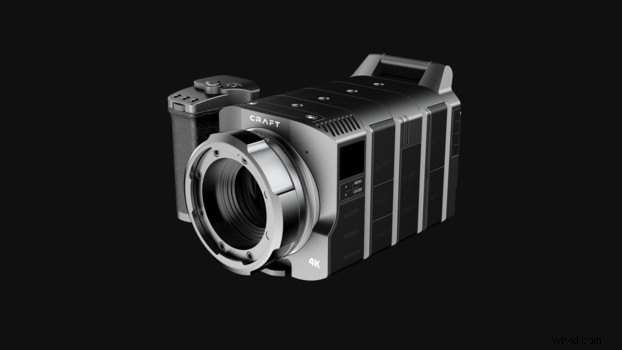
Well, Craft has a few pre assembled options for a basis of example ranging from Studio (Video Element and LCD Element but no storage), to Action Camera (Video Element and Storage Element), to Cinema Camera (Includes everything short of the remote operating element) and the prices are as follows:
Studio Setup
- HD - $998 USD
- 4K - $1,698 USD
Action Camera Setup
- HD - $1,098 USD
- 4K - $1,998 USD
Cinema Camera Set Up
- HD - $1,994 USD
- 4K - $2,894 USD
For a more in depth look at the prices you can check out their current pricing catalog.
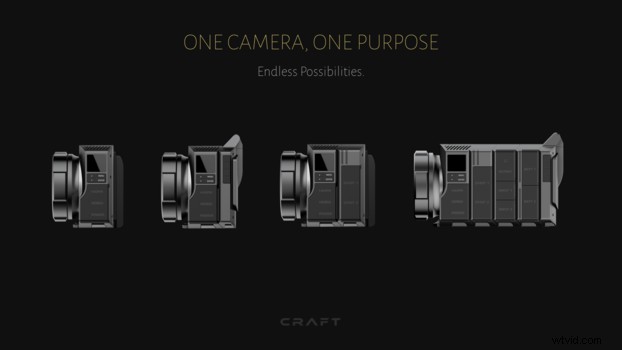
So in closing, is this system going to live up to its hype? Is it going to be able to deliver on the quality expectations that people have come to demand when you start throwing the word "cinema" around? I don't know, and only time will tell. There is still a good bit of information that I would like to see be released as far as some of the specifics of the platform and keep in mind, all this information has just been pulled from what the company is saying about it. I will say though, that at a minimum, I'm intrigued by its compactness, with the full assembled "cinema" version you're only holding something less than seven inches long and less than four inches tall and wide, minus the lens. But even better, an action camera that's maybe only three inches long also not including the lens, and that's pretty compact for something that can deliver 4K CinemaDNG footage. Especially if you compare it to my Sony FS700, which I briefly mentioned in my article where I reviewed the a7S II. That compactness is definitely going to be a terrific asset for someone that likes to bring their camera everywhere, and get the best footage possible without lugging around bulky amounts of equipment, or even to mount it in small or tight spaces that you would have only thought to use one of the Action cameras already available on the market. The modular idea has been used with some success in other companies so I'll be curious how this will stack up in the long run but I see no reason why it won't work here as well. At this point, all we can do is wait and speculate as to how this will fare on the market and in the hands of the consumers that end up using them. They state in the FAQ section that they will be releasing more information in early Summer on the technical specifics so keep an eye out for potentially a follow up article with those updates at that time.
UPDATE - For those asking about physical prototypes they posted an image on their Facebook showing a Video Element in hand with an MFT Mount!
[via Craft Cameras]