
Quality audio always makes a difference, no matter of the scale of your project. There is some misunderstanding as to what kind of recording device or pre-amp audio adapter should you buy for your DSLR rig to achieve the best possible results while recording audio. For instance, what is the difference between passive and active adapters and which one should you choose?
The short answer is – it depends on. There are certain situations where the passive adapter will be more suitable for the job and visa verse. In short, passive audio adapters don’t use electronics to transport the audio signal as it flows through transformers from the balanced inputs from the XLR connectors to your camera.
A good example of such audio adapter is the DXA-SLR Pure from Beachtek.
DXA-SLR PURE audio adapter from Beachtek Inc. on Vimeo.
The passive audio adapters don’t provide any gain or phantom power which means that the output signal will only be as high as the input signal. One of the biggest advantages using such gear is that you will not need any power or batteries to sustain the device. It will conduct the audio signal even if the adapter is switched off. Usually, this kind of adapters provide exceptionally low noise, wide bandwidth and balancing transformers. This allows you to record pristine, high-quality audio directly to the camera which will always be in sync with the video eliminating of syncing the audio in post production.
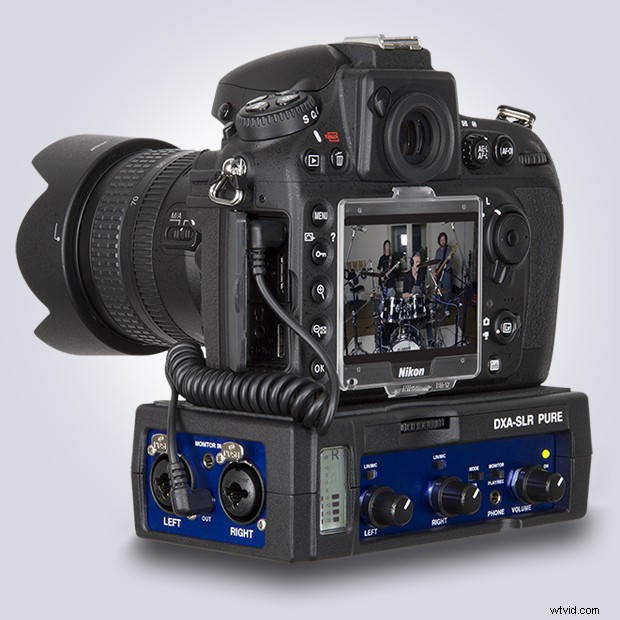
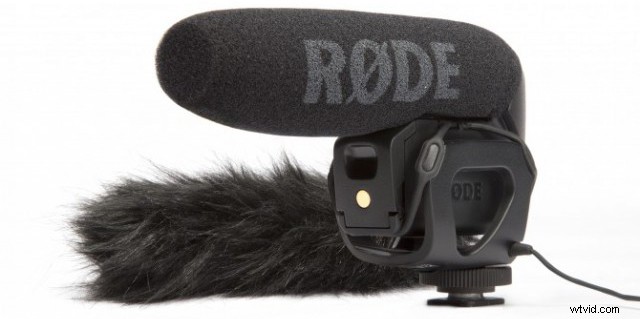
Passive adapters are ideal for use with wireless mics or being connect to a mixing board. It can also be used with some high output wired microphones such as the popular Rode VideoMic Pro which has a +20dB boost feature.
On the other hand, active adapters have an additional preamplifier to boost the audio signal and provide gain. They are mainly suitable for microphones that use 48V Phantom Power to work properly. The ability to provide a strong clean signal to the input of the camera and to attach a high-quality condenser mic or shotgun are among the biggest advantages of the active audio adapters. This type of gear allows you to minimize the gain of the preamplifiers in the camera for very clean sound.
The lower the gain of the camera preamplifiers you use, the lower the noise will be in the end. By using an external low-noise preamplifier, you can dramatically increase the signal-to-noise ratio of the captured audio to match or exceed the quality of a typical digital audio recorder. This is the primary reason active audio adapters such as the Panasonic’s DMC-YAGH add-on and the Beachtek DXA-SLR ULTRA are so popular among many DSLR filmmakers.